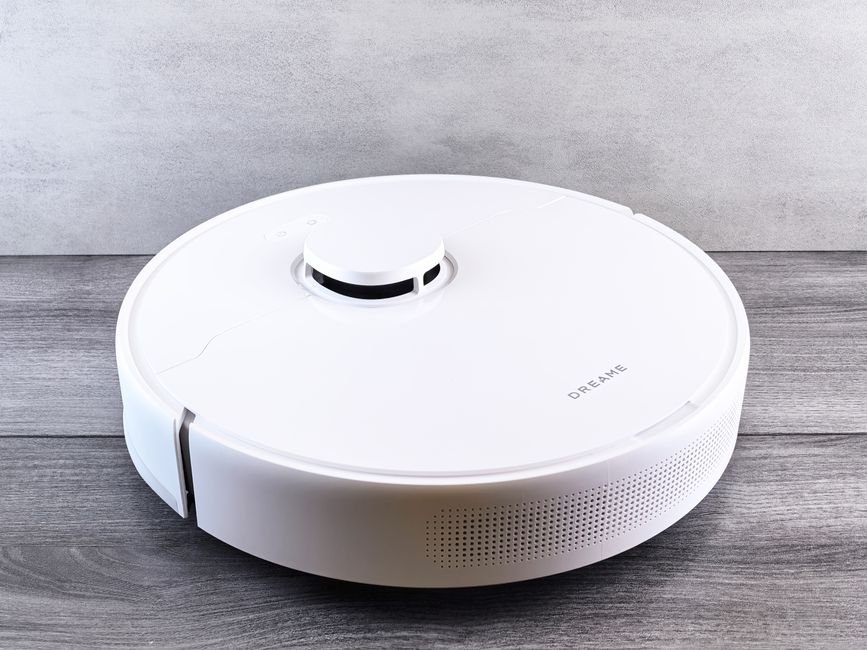
Roborock Saros 20 vs Saros 20 Flow vs Saros Rover: Which 2026 Flagship Is Actually Worth Your Money?
Short answer: The Roborock Saros 20 Flow ($1,699.99) adds a continuously self-rinsing roller mop and a new RockDock fresh-wash system on top of the standard Saros 20’s ($1,599.99) hardware. Both share 36,000 Pa suction and the same threshold-crossing chassis. The Saros Rover, at roughly $2,499, is a different device entirely — a stair-climbing robot still not fully shipping — not a mop upgrade at all. For most single-floor homes, the $100 gap between the Saros 20 and the Flow is the only decision that actually matters right now.
Roborock didn’t just refresh one robot vacuum this September — it put three different flagship approaches on shelves within weeks of each other, and the names are close enough to blur together. Two of them mop your floor. One of them wants to climb your stairs. Here’s what actually separates a $1,599.99 machine from a $1,699.99 one, and why the third option isn’t really competing with either.
What This Compares
- What Did Roborock Actually Launch This September?
- Saros 20 vs Saros 20 Flow vs Saros Rover: Full Spec Comparison
- What Does the Extra $100 on the Flow Actually Buy You?
- Is the Saros Rover Even a Real Alternative Right Now?
- How Do You Decide Which One Fits Your Home?
- Common Mix-Ups Buyers Are Making
- Tips
- Warnings
- FAQ
- Sources
What Did Roborock Actually Launch This September?
Roborock unveiled the Saros 20 Flow and the stair-climbing Saros Rover at IFA 2026 in Berlin, alongside the standard Saros 20 that had already been selling in the US. When I checked Roborock’s own US store listings, the Saros 20 Flow went live domestically in mid-September at a launch price of $1,499.99, moving to its regular $1,699.99 after September 20 — a narrower window than the “coming this fall” framing some early coverage used.
The Saros Rover is a different story. It’s built around a two-wheel-leg chassis specifically designed to climb stairs, and as of this write-up it’s still listed by multiple outlets as not fully shipping, with a realistic release window closer to late 2026 or 2027.
Saros 20 vs Saros 20 Flow vs Saros Rover: Full Spec Comparison
| Spec | Saros 20 | Saros 20 Flow | Saros Rover |
|---|---|---|---|
| US price | $1,599.99 | $1,699.99 | ~$2,499 (unconfirmed) |
| Suction | 36,000 Pa | 36,000 Pa | 22,000 Pa |
| Mop self-cleaning | Hot-water wash at dock (up to 212°F) | Continuous warm-water rinse while cleaning (SpiraFlow 2.0) | Not its focus |
| Threshold crossing | Up to 3.46 in (AdaptiLift Chassis 3.0) | Up to 8.8 cm (AdaptiLift Traverse 3.0) | Climbs full stairs |
| Runtime | Not the headline spec | Not the headline spec | 240 minutes |
| Best for | Single-floor homes, tightest budget | Homes with pets or heavy mop use | Multi-level homes (once actually shipping) |
What Does the Extra $100 on the Flow Actually Buy You?
Both models share the same 36,000 Pa HyperForce motor and a RockDock with hot-water self-cleaning, so the suction and the between-run maintenance are identical on paper. The difference sits entirely in how the mop stays clean while the robot is actually working.
The standard Saros 20 washes its mop at the dock, between passes. The Flow’s SpiraFlow 2.0 system pressurizes and rinses the roller mop with warm water continuously, mid-clean, so it’s less likely to drag dirty water across a floor it already covered. Roborock also gave the Flow a slightly taller threshold-crossing spec (8.8 cm vs 3.46 in on the standard model — close enough that it rarely decides the purchase on its own) and swapped in a RetractSense navigation system with a retractable LDS sensor for tighter furniture clearance.
When I compared the two spec sheets side by side, the honest takeaway is that the Flow is a mop-hygiene upgrade, not a suction or coverage upgrade. If you don’t mop often, or your home is mostly hard floor with light traffic, the $100 buys you a feature you may barely notice.
Is the Saros Rover Even a Real Alternative Right Now?
Not yet, and treating it as a third option in the same buying decision is the biggest mistake shoppers are making with this launch. The Rover trades suction power — 22,000 Pa versus 36,000 Pa on both Saros 20 models — for a completely different capability: climbing actual stairs on a two-wheel-leg chassis, something neither Saros 20 variant attempts.
That’s a multi-level-home problem the Flow and standard Saros 20 were never built to solve. But multiple outlets still list the Rover as not fully available for retail purchase, with a realistic ship window sliding into late 2026 or 2027. If your decision is “which one do I buy this week,” the Rover isn’t actually on the table yet.
How Do You Decide Which One Fits Your Home?
- Check whether you mop daily or occasionally. Heavy, frequent mopping favors the Flow’s continuous rinse. Occasional mopping makes the standard Saros 20’s dock-based wash close enough.
- Measure your worst threshold. If nothing in your home exceeds about 3 inches, the standard Saros 20’s chassis already clears it — you’re not missing anything by saving the $100.
- Confirm you’re single-level. Neither Saros 20 variant climbs stairs. If you need multi-floor coverage from one robot, wait for the Rover to actually ship rather than buying a Saros 20 as a placeholder.
- Price-check before you buy. The Flow’s launch pricing window already closed once (September 20); confirm the current listed price on Roborock’s own store before assuming the lower figure still applies.
Common Mix-Ups Buyers Are Making
The names are the whole problem here.
People searching “Saros 20 Flow” are landing on Saros Rover coverage and vice versa, because both launched in the same IFA news cycle with similar “flagship refresh” framing. They solve different problems — one is a mop upgrade, the other is a stair-climbing robot.
A second mix-up: assuming AU or UK pricing (some early coverage cited roughly $2,799) applies to the US market. It doesn’t. Roborock’s own US store lists the Flow at $1,699.99, not the higher regional figure that circulated right after the Berlin announcement.
Most people skip checking the dock compatibility, too — the Flow’s Pressurized Fresh-Wash System is specific to its own RockDock and isn’t a drop-in swap with the standard Saros 20’s dock if you already own one.
Tips
- If you already own a standard Saros 20 and are happy with it, the Flow isn’t worth trading up for — the suction and threshold specs barely move.
- Buy directly from Roborock’s US store or a listed authorized retailer to avoid paying leftover regional pricing that got indexed right after the IFA announcement.
- If pet hair and tangling are your main issue, both Saros 20 variants share the same Dual Zero-Tangle System — you don’t need the Flow specifically to get that.
Warnings
- Don’t buy a Saros Rover expecting it on your doorstep this month — as of this write-up it’s still not confirmed as fully shipping to retail.
- Watch for stale pricing in search results; the Flow’s $1,499.99 launch price expired September 20 and several cached listings still show it.
FAQ
Can I put the Saros 20 Flow’s mop pads on a standard Saros 20?
The core mop hardware is similar, but the SpiraFlow 2.0 continuous-rinse system is tied to the Flow’s specific dock and internals — the standard Saros 20’s dock washes at the dock only, so the two aren’t a simple mix-and-match upgrade.
Does the Saros Rover replace the need for a second robot on a different floor?
That’s the goal Roborock is building toward, but with the Rover not yet confirmed as fully shipping, most multi-level households still need a robot per floor for now.
Is 36,000 Pa actually noticeably stronger than the older Saros 10 series?
Yes — reviewers have described it as roughly triple the suction of premium models from just two years earlier, though real-world carpet performance depends more on pile height and brush design than the Pa number alone.
Sources
- Roborock US — Saros 20 Flow Official Product Page
- Roborock US — Saros 20 Official Product Page
- VacuumWars — Roborock Saros 20 Flow Launches in the U.S. After IFA 2026 Preview
🔗 Related guides
- Eufy Omni S2 vs Ecovacs Deebot X12 vs Roborock Saros Rover: Is the 2026 Robot Vacuum Refresh Worth Upgrading For?
- Dyson’s New UV Self-Cleaning Robot Vacuums Just Launched — Is the UV Feature Actually Worth Paying More For? (September 2026)
- Your Claude ‘Opus’ Alias Might Still Be Opus 5, Not 5.5 — Here’s the Fix (2026)
Fact-checked based on public sources and Roborock’s official US store listings as of September 29, 2026. Pricing changes frequently for newly launched hardware — always confirm the current price on Roborock’s own site before buying.