How to Read a Supplement Label Like a Pro
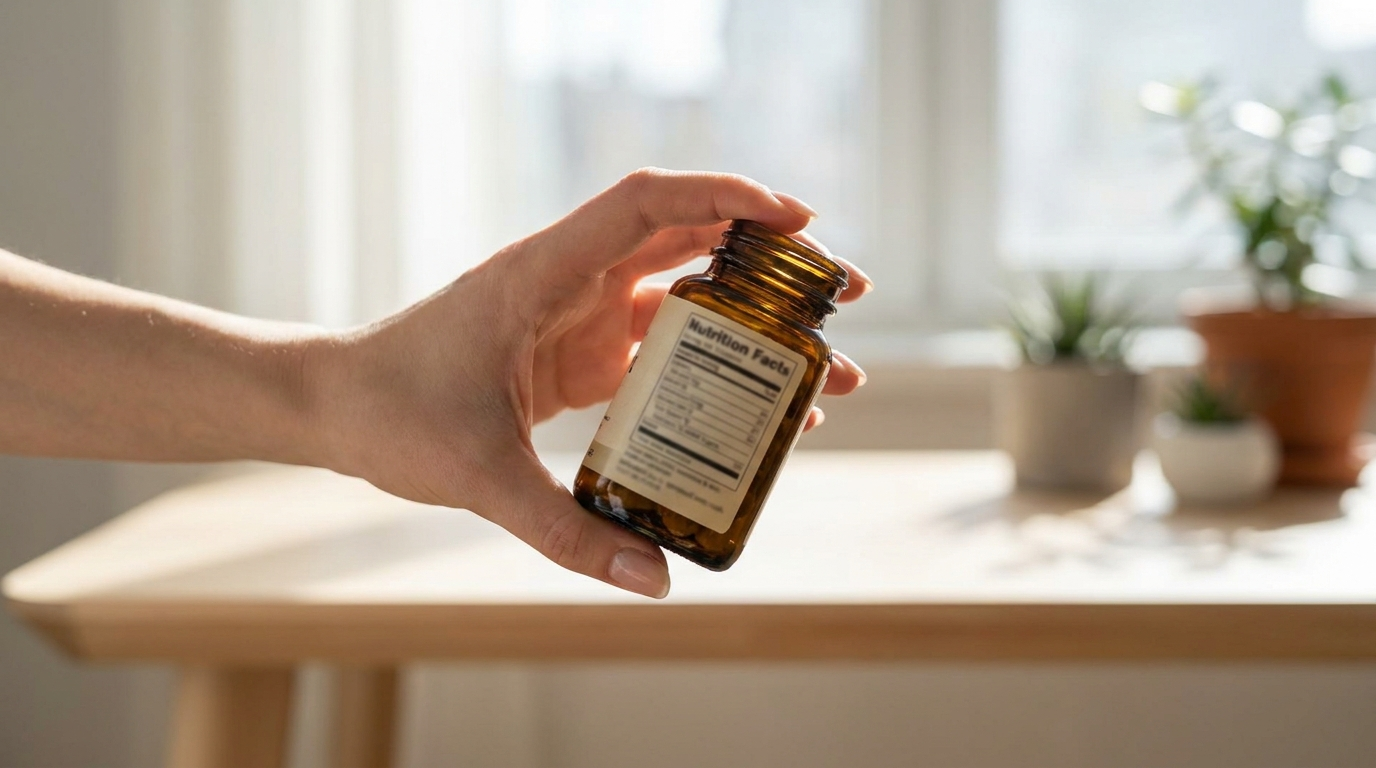
Supplement labels bury the details that matter behind marketing claims on the front of the bottle. Flip it over, though. The back panel is where the truth actually lives, and here’s what I check every single time.
📌 Related reading: 2026 Best Protein Powders Compared by Type and How to Spot a Fake Online Store Before You Checkout
In This Guide

Steps
Step 1: Check the Serving Size First
Serving size is the number everything else hangs on. Every dose. Every percentage. Every claim on that panel gets measured against it. So a product can look impressive per serving while quietly asking you to swallow four capsules to get there. Find it at the top of the Supplement Facts panel, on the “Serving Size” line, with “Servings Per Container” sitting right under it.
Here’s where it gets you. A bottle of 60 capsules with a 2-capsule serving lasts 30 days, not 60. Read that again. It quietly doubles what you actually pay each month.
Some brands push it further and call a serving a fraction of a scoop, or half a tablet. Easy to breeze past when you’re skimming. My rule: before you compare two products, drag their numbers to the same baseline — per 1,000 mg, say — and only then decide which one really gives you more.
Step 2: Look at the Active Ingredient Amount, Not Just the Blend Name
Watch the word “blend.” That’s the tell. A “proprietary blend” folds the real amount of each ingredient into one combined weight, and that single number works overtime to stop you comparing anything. What you want instead: labels that spell out each active ingredient’s own dose.
Picture a label that reads “Energy Blend: 1,200 mg,” with caffeine, green tea extract, and taurine listed underneath — no individual figures. Is that 470 mg of caffeine or 18? You genuinely cannot tell. And that gap bites twice, once on whether the thing works and once on safety, because caffeine tolerance swings wildly from one person to the next.
When I’ve lined up popular protein powder labels side by side, the ones that broke out each amino acid or enzyme dose were far easier to check against real clinical study amounts. The ones hiding everything in a blend? Guesswork. Transparency, it turns out, tends to be its own quality signal.
Step 3: Check the Percent Daily Value Where Listed
Raw milligram numbers leave out context. The Percent Daily Value column hands it back to you — it tells you how a nutrient’s amount stacks up against general daily recommendations. A vitamin listed at 500% Daily Value isn’t automatically dangerous. But pause on it. Ask why the dose runs that high, especially for fat-soluble vitamins like A, D, E, and K, the ones your body stores instead of flushing out.
In my experience the blanks trip people up more than the big numbers do. Here’s where people slip: an ingredient with no established Daily Value — loads of herbal extracts and specialty compounds fall here — just shows a dagger symbol, or the note “Daily Value not established.” Routine. Not a red flag.
Step 4: Review the “Other Ingredients” List for Fillers and Allergens
Flip the bottle. Find the line labeled “Other Ingredients.” That’s where the binders, fillers, and possible allergens live — and it’s exactly the part everyone skips on their way to the flashy main panel. You’ll see names like microcrystalline cellulose, magnesium stearate, silicon dioxide, gelatin, and a handful of food dyes.
Avoiding soy, dairy, gluten, or shellfish? Read this line slowly. Allergens can surface right here even when the front of the bottle stays silent about them.
And don’t skip the capsule shell. Gelatin capsules aren’t vegan- or vegetarian-friendly. Cellulose-based ones usually are. It’s a small thing, rarely advertised, and just as rarely noticed.
Step 5: Check for Third-Party Testing Certification
Ever grabbed a bottle off the shelf without turning it over? This is the step that pays you back the most. Supplement regulation runs looser than the rules for pharmaceuticals — quite a bit looser — so a recognized third-party testing seal does real work. That’s an outside lab confirming the product actually holds what the label claims. The good programs check label accuracy, screen for contaminants like heavy metals, and test finished batches for microbial safety.
Here’s the annoying part. The seal almost never gets star billing. When I’ve hunted for it, it’s usually a small logo down by the barcode or tucked onto the back panel. You have to look on purpose. It won’t jump out at you.
Step 6: Check the Expiration Date and Lot Number
Potency isn’t permanent. The expiration date — sometimes dressed up as “best by” or “use by” — tells you how long the product should hold its strength. And plenty of actives fade even inside a sealed bottle. Probiotics, especially. Certain vitamins too.
The lot number is the quiet one nobody reads. It’s a short alphanumeric code, usually stamped near the expiration date, and it’s how a manufacturer traces a specific production batch when a recall or quality problem shows up. Ever had to report a bad reaction? Having that code on hand makes the whole investigation go far smoother for the company or a regulator.
One shortcut I lean on: buy from a store with high turnover. Fast-moving stock hasn’t been sitting around creeping toward its expiration date.
Step 7: For Athletes, Check for Banned-Substance Certification
Compete in a tested sport? A generic third-party seal won’t cover you, and treating the two as the same thing is a costly mistake. What you actually need are programs built to screen for substances banned by bodies like WADA or the NCAA — usually flagged with their own distinct logo, separate from the general quality-testing marks.
This isn’t hypothetical. Athletes have failed drug tests over contaminated supplements that were never even sold as performance enhancers. The contamination slipped in during manufacturing, on shared equipment. When your eligibility is on the line, this check stops being optional.
Tips

- ✅ Compare cost per actual active dose across brands — not price per bottle. The cheap bottle is often the expensive one.
- ✅ See “proprietary blend”? Treat it as a prompt to slow down and dig into the individual-ingredient transparency.
- ✅ Snap a photo of the label, front and back, before you start something new. Then you’ve got a permanent record if you ever need to recheck an ingredient or report a reaction.
- ✅ Does the bold claim on the front match the cautious structure/function wording buried inside the Supplement Facts panel? Often it doesn’t. Cross-check the two.
- ✅ Heat and humidity quietly kill potency — so store the bottle somewhere dry and cool, not the bathroom cabinet.
Warnings
⚠️ Supplement labeling regulations vary by country and are generally less strict than pharmaceutical drug regulation — third-party testing certification helps verify actual contents but does not replace regulatory approval. ⚠️ Some ingredients can interact with prescription medications or existing health conditions even at label-listed doses. ⚠️ This article is for informational purposes only and is not medical advice. Talk to a doctor or pharmacist before starting any new supplement, especially if you’re pregnant, nursing, taking medication, or managing a chronic condition.
References
- NIH Office of Dietary Supplements — Fact Sheets
- U.S. Food and Drug Administration — Dietary Supplements
- U.S. Pharmacopeia (USP) — Verification Services
Q&A
What does “proprietary blend” actually mean?
One combined weight for several ingredients, with no breakdown of what each one weighs. That’s it. And that missing breakdown is exactly what makes it hard to judge effectiveness or line the product up against amounts used in real research.
Are third-party tested supplements always safe?
Safe-ish is closer. The testing confirms label accuracy and screens for contaminants — genuinely useful — but it says nothing about whether the supplement suits your specific health situation. For that? Ask a healthcare provider — they know your history; a batch lab test doesn’t.
Why do some labels list a nutrient with no Percent Daily Value?
Because no official Daily Value exists for it yet. A lot of herbal extracts and specialty compounds fall into that bucket, so the label just shows a symbol noting the value hasn’t been set. Normal. Not a warning sign on its own.
Fact-checked based on public sources as of July 21, 2026.
Frequently Asked Questions
Does a third-party testing seal mean a supplement is safe for me?
Not exactly. The testing confirms label accuracy and screens for contaminants like heavy metals, which is genuinely useful, but it says nothing about whether the product suits your health situation or medications. Supplement regulation is generally looser than for pharmaceuticals, so ask a healthcare provider about your specific case.
Why do some labels list a nutrient with no Percent Daily Value?
Because no official Daily Value has been set for it. Many herbal extracts and specialty compounds fall into this bucket and simply show a dagger symbol or the note that the value is not established. That is routine, not a red flag on its own.
Is a general quality seal enough for athletes in tested sports?
No. A generic third-party seal does not cover banned substances, so you need programs that screen for substances banned by bodies like WADA or the NCAA, usually marked with their own distinct logo. Athletes have failed tests over supplements contaminated during manufacturing, so this check is not optional when eligibility is on the line.