K-Beauty Serum Not Working? How Long It Really Takes and 6 Fixable Reasons
Three weeks into a new Korean serum and your skin looks exactly the same. Nothing worse. Nothing better. That flat, did-I-waste-my-money feeling is the single most common reason people abandon a bottle that was actually fine.
Most of the time the serum isn’t broken. The clock is. Skin renews itself on a schedule that has nothing to do with how badly you want it to hurry, and a handful of ordinary application habits quietly push results even further out.
📌 Related reading: Niacinamide vs Vitamin C: the layering order that avoids trouble · Korean sunscreen pilling or white cast? What causes it
What’s on this page

- How long each serum type actually needs
- Reason 1: you’re judging it mid-cycle
- Reason 2: right serum, wrong problem
- Reason 3: the dose is off
- Reason 4: too many new things at once
- Reason 5: dry skin is eating the serum
- Reason 6: the bottle has turned
- What each ingredient is realistically for
- Running a fair 8-week trial
- When it stopped being a serum problem
- Q&A
- FAQ
- Sources
How Long a K-Beauty Serum Actually Needs
Different serums work on different biological clocks. Hydration sits on the surface, so it reads back almost immediately. Anything that has to change pigment or texture has to wait for new cells to reach the top layer of your skin, and that queue is measured in weeks.
| What you’re treating | Earliest honest check-in | What “it’s working” looks like | When to actually quit |
|---|---|---|---|
| Dehydration, tightness, flaking | 3 to 7 days | Skin stops feeling tight by mid-afternoon. Makeup sits flatter. | No change after 2 weeks of daily use. |
| Dullness and uneven tone | 4 weeks | The overall canvas looks less grey in daylight photos, not spot by spot. | Nothing at 10 to 12 weeks. |
| Leftover marks from old breakouts | 8 weeks | The darkest marks fade first. Newer ones lag behind. | Flat at 12 weeks with daily sunscreen. |
| Active breakouts, oiliness | 4 to 6 weeks | Fewer new spots per week. Existing ones calm faster. | No shift by 12 weeks, or it’s getting worse. |
| Fine lines and firmness | 12 weeks | Subtle. Usually noticed in photos before the mirror. | Six months of consistent use with nothing. |
Notice how far apart those columns sit. A hydrating snail mucin serum and a peptide serum are not competing on the same timescale, so judging both at the four-week mark guarantees you’ll wrongly fire one of them.
Reason 1: You’re Judging It Mid-Cycle
Your skin replaces its outer layer on a rolling cycle that commonly gets cited at around a month, and that cycle stretches out as you get older. What that means practically: the face you saw this morning was largely decided several weeks ago. Today’s serum hasn’t surfaced yet.
The AAD’s guidance for acne patients is blunt about this. Expect several weeks to a few months. They also warn that switching treatments too often can irritate skin and trigger breakouts, which is exactly the trap an impatient shopper falls into.
So the four-week verdict is almost always premature. Give it eight.
Reason 2: Right Serum, Wrong Problem
This is the quiet one. The serum performs perfectly at the job it was formulated for, and that job isn’t the thing bothering you.
Hyaluronic acid and snail mucin move water around. They will not clear an active breakout. Centella calms redness and reactive skin, and it does very little for a dull, sallow tone. Peptides target firmness on a months-long horizon and have no hydration payload worth mentioning.
When I compared the published ingredient lists on several popular Korean serum pages, the pattern was consistent: the marketing copy on the front of the box promised a broad glow, while the actual active sat in one narrow lane. Read the ingredient list, not the box.
Write down the one thing you want fixed. One. Then check whether the serum’s headline ingredient has anything to do with it.
Reason 3: The Dose Is Off
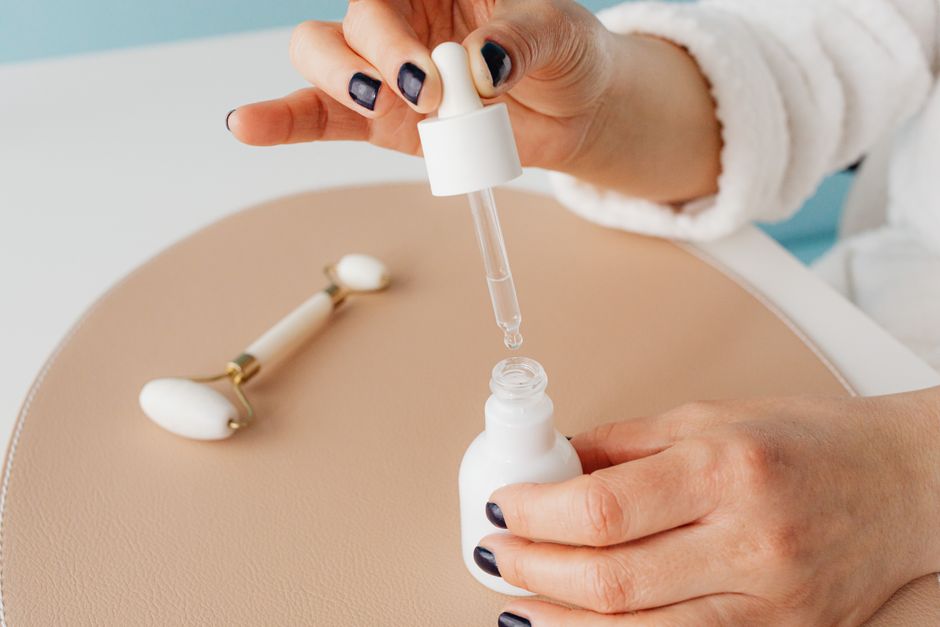
Two or three drops covers a face. That’s the number most Korean brands print on the packaging, and plenty of people run well under it because the bottle feels expensive.
Under-dosing is real. A thin film that only reaches your cheeks is not the same routine the brand tested.
Overdosing has its own failure mode. Pile on six or seven drops and the excess just sits there, refusing to sink in, then rolls up under sunscreen. That isn’t a sign of a bad formula. It’s a sign there was more product than your skin could take at once. Split it into two thin layers a minute apart instead of one thick one.
A rough calibration: after a minute, your skin should feel slightly damp and grippy, not wet and not slick.
Reason 4: Too Many New Things at Once
You bought three serums in the same haul because the bundle was cheaper. Now nothing is obviously helping and something is faintly irritating, and you have no way to tell which bottle is which.
Add one active at a time. Wait two weeks. Then add the next.
It feels painfully slow. It’s also the only method that produces an answer you can trust, and it saves you from throwing out a good serum because a different one was the problem. If you’re combining a vitamin C with a niacinamide, the sequence matters more than most people expect, and that’s covered in the layering guide.
Reason 5: Dry Skin Is Eating the Serum
Humectant serums, the hyaluronic acid and glycerin types, pull water toward the skin surface. In a dry room they can end up pulling it out of your skin instead of into it, and you finish the day tighter than you started.
Two fixes. Apply to slightly damp skin, straight after cleansing, before the water has fully evaporated. Then seal it with a moisturizer within a minute or two.
Without that seal, a humectant serum in winter air is doing half a job. The AAD’s dry-skin guidance leans on the same principle: moisturize while the skin is still damp to trap the water that’s already there.
Reason 6: The Bottle Has Turned
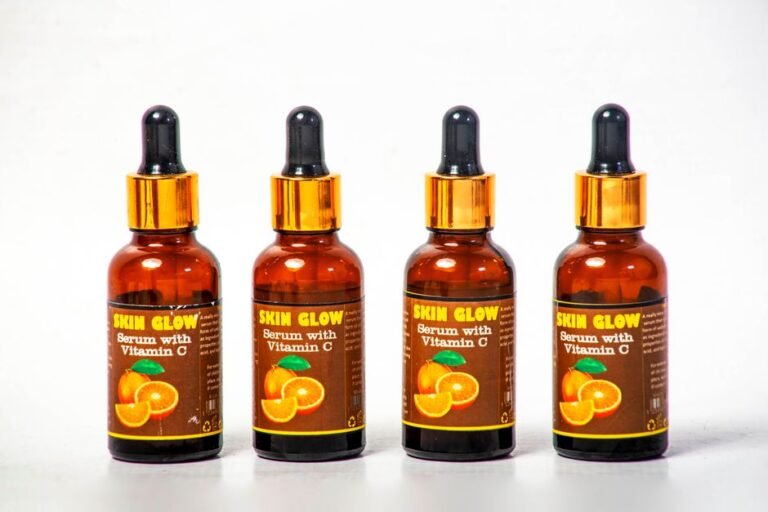
Open a vitamin C serum, leave it six months on a sunny windowsill, and it will go from pale straw to amber or brown. That colour shift is oxidation, and an oxidized serum is a weaker serum.
Snail mucin and niacinamide are far more stable, but they aren’t immortal either. Most Korean packaging carries a small open-jar symbol with a number like 6M or 12M — that’s the months-after-opening window, not the shelf life of a sealed bottle.
Check three things before blaming the formula. Has the colour drifted? Does it smell sharper or more sour than it did on day one? Has the texture gone thin or separated? Any one of those and the serum has been running at reduced strength for a while, which neatly explains why month three did nothing.
Dropper bottles let in more air than pumps. Store them away from the bathroom window.
What Each Ingredient Is Realistically For
Reframed by problem rather than by ranking, because there is no single best serum — only a serum that matches or doesn’t match the thing you’re trying to fix.
| Ingredient | The problem it’s genuinely for | Commonly seen in | How it feels | Typical price (30-50ml) | What it won’t do |
|---|---|---|---|---|---|
| Hyaluronic acid, snail mucin | Dehydration. Tightness. Flaking, including on oily skin. | COSRX Snail 96 Mucin Essence | Light with a tacky finish. | $17–$22 | Clear active acne. Fade old marks. |
| Niacinamide | Dull tone. Leftover discolouration from healed breakouts. | Round Lab, Some By Mi | Watery, close to a thin lotion. | $14–$20 | Deliver anything visible in week one. |
| Centella asiatica (cica) | Redness. Skin that flares easily. Post-irritation calming. | SKIN1004 | Gel. Sinks in fast. | $16–$24 | Hydrate very dry skin on its own. |
| Peptides, adenosine | Firmness and early fine lines, on a months-long horizon. | Isntree, Beauty of Joseon | Richer. Silky once it settles. | $18–$28 | Produce a quick glow. Fix texture fast. |
Prices drift with retailer and exchange rate, so treat that column as a band rather than a quote.
Running a Fair 8-Week Trial
- ✅ Photograph your face on day one. Same window, same time of day, no filter. Memory is a terrible baseline.
- ✅ Change one variable. Keep cleanser, moisturizer and sunscreen identical for the whole run.
- ✅ Use it daily. Clinical results come from consistent use, not from three times a week.
- ✅ Wear sunscreen if you’re chasing tone or marks. Skipping it cancels most of what the serum is doing.
- ✅ Re-photograph at week 4 and week 8, then compare the pictures rather than the mirror.
- ✅ Stop immediately if you get stinging, persistent redness or new bumps. That’s not a trial, that’s a reaction.
Results vary between people in ways no article can predict. Two people with the same stated skin type can land in different places on the same serum, and that’s normal rather than evidence that one of them did it wrong.
When It Stopped Being a Serum Problem
Some things don’t respond to serums at all, and grinding through bottle after bottle just delays the fix.
Deep cystic acne is one. So are melasma and rosacea. Persistent eczema belongs on that list too — all of them are managed medically rather than with an essence. If irritation keeps returning, or if a mark is spreading or changing shape, see a dermatologist rather than reordering. Same goes for any stinging that doesn’t settle within a few minutes of application, or that keeps happening every time you use a product.
A prescription can do in eight weeks what a shelf of serums won’t do in a year.
Q&A
Q: My serum worked for two months, then seemed to stop. Did my skin build a tolerance?
A: More likely your skin reached the ceiling of what that ingredient can do and is now holding steady. Maintenance looks like no further improvement. That’s success, not failure. The other suspect is an oxidized bottle — check the colour.
Q: Can I speed this up by using it morning and night?
A: For gentle hydrators, sure, twice daily is fine. Doubling up on stronger actives mostly buys irritation, and irritated skin makes everything look worse for a while.
Q: Does an expensive serum work faster?
A: No. Concentration and formulation decide the pace, and plenty of budget Korean brands use the same headline actives as the premium tier. Price buys packaging and texture more often than speed.
Q: I switched serums three times in six weeks and nothing worked. What now?
A: You never gave any of them a full cycle. Pick the one that suited your actual concern, run it alone for eight weeks, and don’t touch anything else.
FAQ
How many drops of serum should I use?
Two to three for the whole face is the standard printed dose. Thin layers beat one heavy one.
Is it normal to see nothing at all after one month?
For tone, marks and firmness, yes, completely normal. For a hydrating serum, no — that one should have declared itself in the first week or two.
Does snail mucin actually do anything?
It hydrates and supports the barrier, and that part holds up. It isn’t a treatment for acne or pigmentation, and the marketing sometimes blurs that line.
Should I keep serum in the fridge?
It won’t hurt, and it slows oxidation on vitamin C. A dark cupboard away from the shower does nearly as well.
Sources
- American Academy of Dermatology — Acne: Tips for managing — expect several weeks to a few months for results; switching treatments too often can irritate skin.
- American Academy of Dermatology — Skin care secrets for healthier-looking skin — general routine and product-use guidance.
- American Academy of Dermatology — Tips for relieving dry skin — applying moisturizer to damp skin.
- MedlinePlus — Skin conditions — when a skin concern needs medical assessment.
- COSRX official site — published ingredient lists and usage directions.
Educational information only, not medical advice. Individual results differ. If irritation persists or a skin concern changes, consult a dermatologist. Fact-checked against public sources as of July 29, 2026.