A $29 Spider-Man Card Sold for $175,100: 4 Real 2026 Non-Sports Card Sales, and How to Tell If Yours Is Worth Grading
Short answer: Four non-sports card sales from 2026 tell the same story. Condition and grade did most of the work, not age. A 1966 Spider-Man card valued at $29 in 2013 sold for $175,100 as a PSA 9. A near-mint Mars Attacks set brought $268,400 when worn sets go for about $1,500. Before you sell an old binder, check sold prices for the exact card and grade. Check how many graded copies exist. Then decide whether grading pays at today’s $20 to $60 fees. This is not investment advice, and prices are as reported in October 2026.
Somebody paid $175,100 for a Spider-Man card last month.
In 2013, the same card in the same grade was valued at $29. That’s according to a CNBC report published October 10, 2026, which pulled together the year’s biggest trading card sales outside sports.
Those numbers make people dig out old shoeboxes. Fair enough. But read the four cases below closely and the pattern isn’t “old cards are worth a fortune.” It’s narrower than that, and much more useful if you’re deciding what to sell, grade, or leave alone.
Jump to a Section
- Case 1: How did a $29 Spider-Man card sell for $175,100?
- Case 2: Why did one Mars Attacks set sell for 179 times another?
- Case 3: What made a 1977 Luke Skywalker card worth $687,500?
- Case 4: Did the $16.5 million Pikachu Illustrator actually make money?
- What the Four Sales Have in Common
- How do you check whether your own non-sports cards are worth grading?
- Tips
- Warnings
- FAQ
- Sources
Case 1: How did a $29 Spider-Man card sell for $175,100?
A 1966 Donruss Spider-Man card graded PSA 9 sold for $175,100 in September 2026, after being valued at $29 in 2013, according to CNBC’s October 10, 2026 report on non-sports card prices.
That’s roughly 6,000 times the 2013 figure. Before you go looking for your own copy, note the two words doing the heavy lifting: “PSA 9.”
A 9 on PSA’s 1-to-10 scale is mint. For a 60-year-old card printed on cheap stock and handled by kids, that’s rare. Most surviving 1966 cards have soft corners, centering problems, or creases. Those copies don’t trade anywhere near this level.
The other driver is the character. Superheroes moved from comics to TV to movies, and each new wave brought in buyers who grew up with a different Spider-Man. A card that was just a cheap TV tie-in in 2013 now has buyers across several generations.
Lesson: the top grade of a beloved character’s early card is what moved. Not the set as a whole.
Case 2: Why did one Mars Attacks set sell for 179 times another?
A near-mint complete set of Topps’ 1962 Mars Attacks cards sold at Heritage Auctions for $268,400, while full 55-card sets in poor condition can fetch around $1,500, according to figures CNBC reported in October 2026.
Same cards. Same 55 pictures. Same year. One set sold for about 179 times the other.
When I compared the two prices, I found that this is the single clearest example of what condition is worth in this hobby. Many parents objected to Mars Attacks’ gory art when it came out, CNBC notes, and these were kids’ cards that got handled like kids’ cards. A set that survived in near-mint shape is scarce in a way a beat-up set just isn’t.
This trips a lot of people up. A “complete set” sounds valuable. Completeness gets you into the conversation. Condition sets the price.
Case 3: What made a 1977 Luke Skywalker card worth $687,500?
A 1977 Topps Star Wars Luke Skywalker card graded PSA 10 sold through Heritage Auctions for $687,500 in May 2026, and Heritage’s Joe Maddalena told CNBC the card is “notoriously hard to find in that grade.”
Here’s the strange part. Topps has made more than 100 Star Wars sets since 1977, and CNBC notes there are literally hundreds of millions of Star Wars cards in print. Most of them are cheap. You can buy individual cards and full sets for small money.
So supply in general didn’t matter. Supply at the top grade did. A PSA 10 means gem mint, and the number of 1977 Luke cards that earned it is tiny.
If you have a 1977 Star Wars card, the useful question isn’t “is it rare?” It’s “how many copies have been graded, and how many got a 10?” That number is called the population, and it’s public.
Case 4: Did the $16.5 million Pikachu Illustrator actually make money?
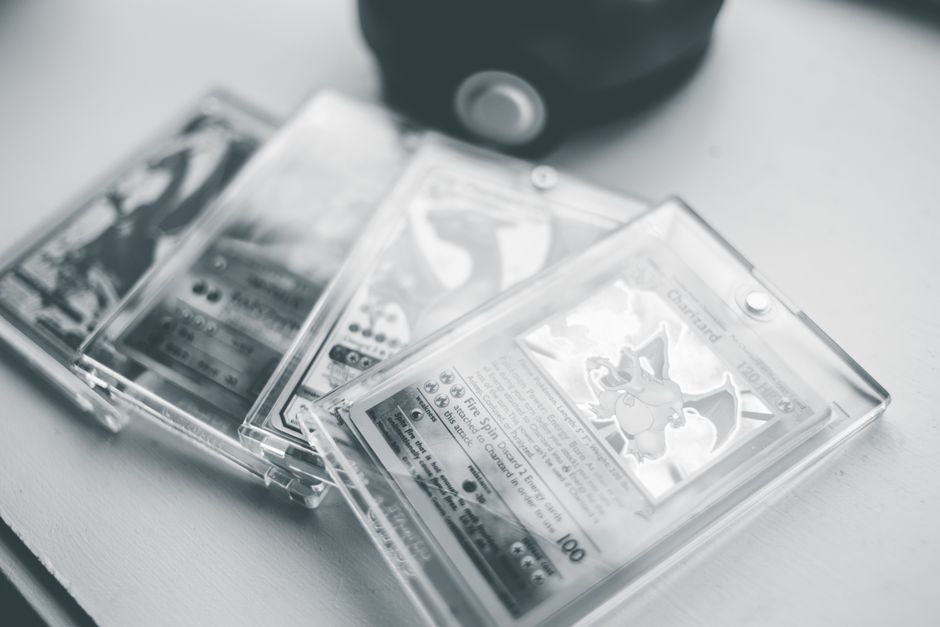
Logan Paul sold his 1998 Pikachu Illustrator card for about $16.5 million in 2026, after paying $5.3 million plus a trade for it in 2021, according to CNBC’s October 2026 report, which is a gross gain of roughly three times the cash price over about five years.
Three times in five years is a strong return. It’s also nowhere near the Spider-Man card’s jump. And it comes with costs the headline leaves out: auction fees, insurance, storage, and the unknown value of the card Paul traded in.
Honestly, this is the case most people misread. The record price made the news. But the buyer in 2021 was already paying a record-level price for one of the most famous cards in the hobby. The upside on a card that’s already a trophy is real, but it’s smaller than the jump on a card nobody was watching.
What the Four Sales Have in Common
Here are the four cases next to each other. The multiples are my own math from the prices CNBC reported, and they ignore fees, so treat them as rough.
| Card | Grade / condition | Earlier figure | 2026 sale | Rough multiple |
|---|---|---|---|---|
| 1966 Donruss Spider-Man | PSA 9 | $29 value (2013) | $175,100 (Sept.) | ~6,000x |
| 1962 Topps Mars Attacks set | Near mint vs. poor | ~$1,500 (poor set) | $268,400 (near mint) | ~179x (condition gap) |
| 1977 Topps Luke Skywalker | PSA 10 | Common in low grades | $687,500 (May) | n/a |
| 1998 Pikachu Illustrator | Top-graded copy | $5.3M + trade (2021) | ~$16.5M | ~3x cash price |
All four sales as reported by CNBC, October 10, 2026. Multiples are simple ratios and leave out auction, grading, and insurance costs.
Three things repeat:
- Grade beats age. Every big number is a top-condition copy. The Mars Attacks gap shows it most plainly.
- Characters with staying power. Spider-Man, Star Wars, and Pikachu have kept finding new fans for decades.
- Low population at the top grade. Lots of copies exist. Very few are 9s and 10s.
What doesn’t repeat is “any old card in a box.” Heritage’s Maddalena gave CNBC blunt advice: buy the best card you can afford rather than spreading money across lots of stuff. That same logic works when you sell. One great card beats a binder of decent ones.
How do you check whether your own non-sports cards are worth grading?
A raw non-sports card is usually worth grading only when sold prices for that exact card in a high grade beat its raw price by more than the grading fee plus selling fees, which in October 2026 means clearing about $23 at CGC’s $20 Economy tier or about $69 at PSA’s $59.99 Standard tier.
Method 1: Price the card, not the set
- Identify it exactly. Year, maker, set name, card number. “1977 Star Wars” isn’t enough. Card number and series (blue, red, yellow borders) change the value.
- Search sold listings, not asking prices. On eBay, filter by Sold Items. Look for sales of the same card raw, and in grades 8, 9, and 10.
- Check the population. PSA and CGC both publish how many copies they’ve graded at each level. A card with 4,000 PSA 10s won’t behave like one with 12.
Method 2: Grade your own card honestly first
- Look at the corners under bright light. Any whitening or rounding usually rules out a 9 or 10.
- Check centering. Compare the border widths left to right and top to bottom. Visibly lopsided cards lose grades fast.
- Tilt the card toward a lamp to spot surface scratches, print lines, and dents you can’t see straight on.
- Sleeve it now. Put it in a penny sleeve and a top loader before it goes anywhere.
When I checked our break-even math from last week’s PSA vs. CGC fee comparison, the cutoff held up. Cards that sell raw for under about $40, with no proven graded premium, rarely cover a fee. A 7 or 8 almost never does.
Method 3: Check what selling will cost
- Factor the platform fee. eBay’s selling fees page lists a 13.25% final value fee on trading card sales up to $7,500 as of October 2026.
- Price the grading tier. Compare CGC’s card grading fees with PSA’s before choosing. PSA’s cheapest Value tiers were paused as of October 10, 2026.
- Consider an auction house for true high-end cards. For a card that could clear five figures, a specialist auction can reach more serious buyers than a regular listing.
Tips
- Sort a big collection by character first. Spider-Man, Star Wars, and Pokémon cards deserve a closer look before generic TV tie-in sets.
- Photograph the front and back of anything you think could be valuable before you mail it. It’s your record if a package goes missing.
- Look up the cert number on any graded card you buy. Every legitimate PSA slab can be checked on PSA’s cert lookup.
- Keep receipts for what you paid. Gains on collectibles can be taxed, and your cost basis lowers the bill.
Warnings
- Fakes are surging. PSA told CNBC it flagged about 125% more counterfeit Pokémon cards in 2025 than in 2024, compared with a 5% rise for sports cards.
- Don’t clean, press, or trim a card to “improve” it. Graders look for alterations, and an altered card can come back ungraded.
- Record sales aren’t price guides. One $175,100 sale doesn’t mean every 1966 Spider-Man card is worth anything close to it.
- This article is not investment advice. Collectible prices can fall as fast as they rise, and the prices here are as reported on October 10, 2026.
FAQ
Are old non-sports trading cards worth anything?
Some are, but most are worth a few dollars. The big 2026 sales were top-graded copies of famous characters, like a PSA 9 Spider-Man and a PSA 10 Luke Skywalker. A worn common card from the same sets usually sells for very little.
Should I grade my 1977 Star Wars cards?
Only the ones in near-perfect shape, and only after checking sold prices by grade. Hundreds of millions of Star Wars cards were printed, so ungraded or low-grade copies are common. The money is in the few that can reach a 9 or 10.
Where do non-sports cards sell for the most?
For cards worth tens of thousands of dollars, specialist auction houses like Heritage reach serious collectors. For most cards under a few hundred dollars, eBay or a live-selling app is simpler. Compare total fees before listing.
Sources
- CNBC — Pokémon card values are soaring. What collectors should know before buying or selling (October 10, 2026)
- eBay — Selling fees
- CGC Cards — Services and fees
🔗 Related guides
Fact-checked against CNBC’s October 10, 2026 report and eBay’s and CGC’s published fee pages as of October 13, 2026. Not investment advice. Sale prices are historical and do not predict what any card will sell for.