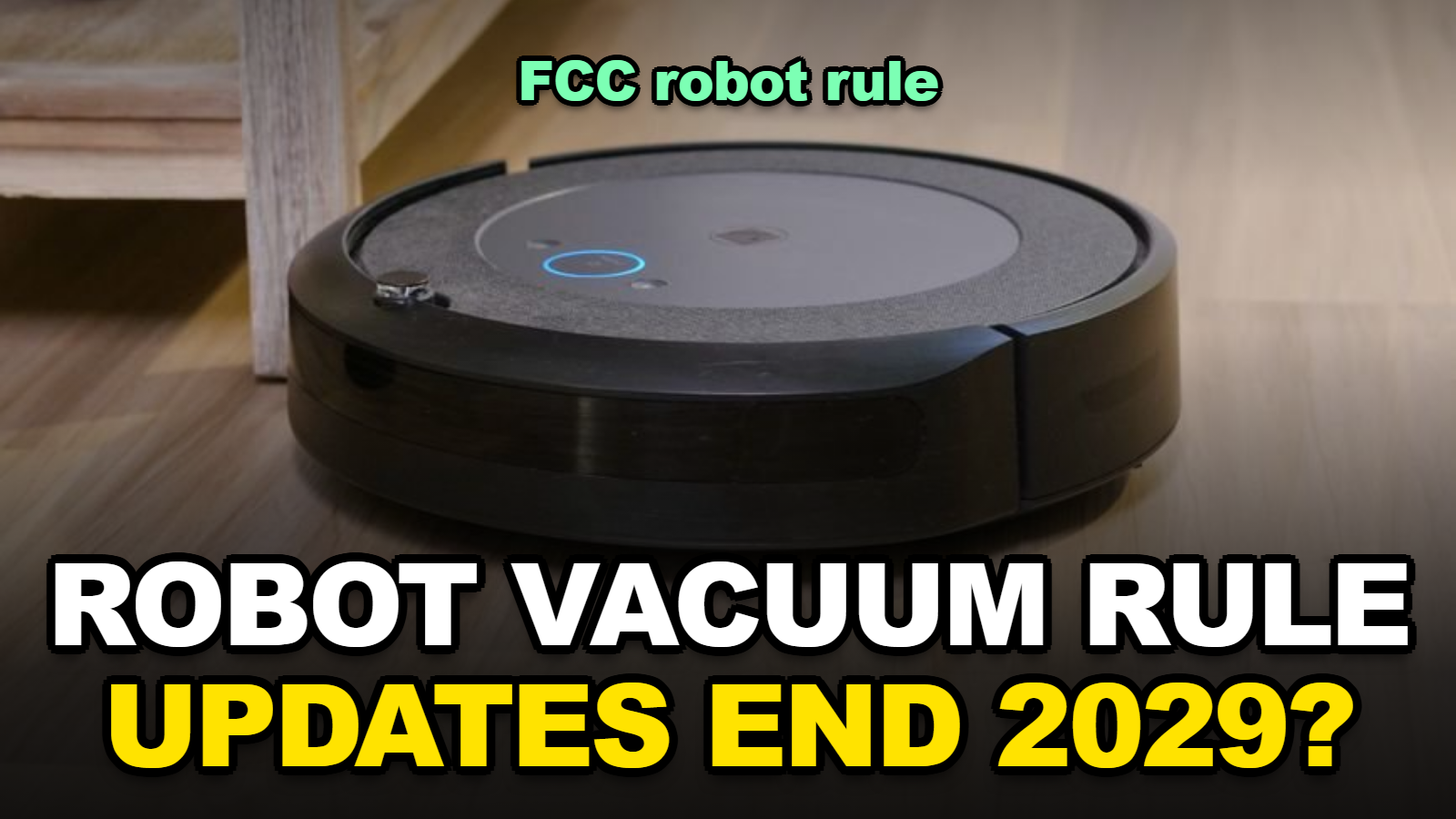
Buy a Robot Vacuum Now or Wait? What the 2026 FCC Robot Rule Means for Updates Through 2029
Short answer: Yes, you can still buy a robot vacuum. Models the FCC already approved can still be sold. What changed is the future. New foreign-made models need extra FCC approval. Firmware updates for existing models are only guaranteed through January 1, 2029. If you’re buying in the October sales, check two things first: the model’s FCC ID, and how long the brand says it will support that model.
The robot-vacuum aisle looks normal this fall. Prime Big Deal Days runs October 6–7, 2026, and early markdowns are already deep — Bob Vila’s September 29 roundup listed the Shark AI Ultra Self-Emptying at $249.99, down from $599.
What’s different is what happens after you buy. A rule change this summer quietly put an end date on the promise that your robot keeps getting fixed.
What This Covers
- What Did the FCC Change for Robot Vacuums in 2026?
- Will My Current Robot Vacuum Keep Working?
- How Long Will a Robot Vacuum Bought Today Get Updates?
- Should You Buy in October or Wait for Black Friday?
- How Do You Check a Model Before You Buy?
- What Can You Do If Updates Stop?
- Tips
- Warnings
- FAQ
- Sources
What Did the FCC Change for Robot Vacuums in 2026?
The FCC’s July 28, 2026 Covered List change blocks new U.S. sales of foreign-produced “advanced robotic devices” — robot vacuums, vacuum-mop combos, and robotic lawn mowers — unless the maker wins conditional approval, according to Consumer Reports’ breakdown of the rule (Vacuum Wars dates the Covered List addition to July 28). Covered devices weigh more than 4.4 pounds and can move, navigate, and be operated remotely.
“Foreign” is defined broadly. Consumer Reports explains that a product counts as foreign if it isn’t made in the U.S. or if domestic components make up less than 65% of its total component cost. That sweeps in nearly every brand on the shelf, including Roborock, Ecovacs, and Dreame.
The FCC’s own guidance document on covered robotic devices spells out the weight and component thresholds for manufacturers.
Will My Current Robot Vacuum Keep Working?
A robot vacuum you already own keeps working after the 2026 FCC rule, and retailers can keep selling and importing models that were authorized before the change, Consumer Reports confirms. Nothing gets switched off, and nobody is confiscating vacuums.
Honestly, that’s the part most headlines got wrong. The word “ban” made it sound like existing robots were in trouble. They aren’t — at least not until the update window closes.
How Long Will a Robot Vacuum Bought Today Get Updates?
Previously authorized robot vacuums may receive software and firmware updates that “mitigate harm to U.S. consumers” until January 1, 2029 under the FCC’s waiver, which works out to about 27 months of guaranteed update eligibility for a robot bought in October 2026. After that date, Consumer Reports warns owners might lose access to security patches.
When I checked how the coverage described that waiver, I noticed that it permits updates but doesn’t require them. Vacuum Wars also points out that the FCC has extended similar deadlines before, so 2029 isn’t necessarily final.
So the real support window is whichever comes first: the brand’s own support policy, or the FCC deadline.
| If you buy in… | Months until Jan 1, 2029 | What that means |
|---|---|---|
| October 2026 (Prime Big Deal Days) | ~27 | Longest guaranteed window of any sale this year |
| Late November 2026 (Black Friday) | ~25 | Two months less, possibly a lower price |
| Mid-2027 | ~18 | Only worth it for a newly approved model |
Table: months of FCC-permitted update eligibility left for previously authorized robot vacuums, calculated to the January 1, 2029 waiver date reported by Consumer Reports. Brand support may end sooner.
Should You Buy in October or Wait for Black Friday?
For most shoppers, buying an already-authorized robot vacuum during the October 6–7, 2026 Prime Big Deal Days sale makes more sense than waiting for Black Friday, because early October discounts on mainstream models already reach 50% or more and waiting trims about two months off the guaranteed update window. The exception is if you want a flagship that hasn’t launched in the U.S. yet.
When I compared the early-October markdowns Bob Vila listed, several were already deep:
- Shark AI Ultra Self-Emptying: $249.99, down from $599
- iRobot Roomba 115X Combo: $199.99, down from $469.99
- Dreame L40 Ultra Gen 2: $499.99, down from $749.99
Will Black Friday go lower? Maybe. Nobody can promise that. What’s more predictable is that the U.S. lineup won’t suddenly fill with new foreign-made 2027 models. Any new model needs conditional approval first.
| Your situation | Best move |
|---|---|
| Current robot is dying, want a mid-range model | Buy an authorized model in the October sale |
| Want this year’s flagship at the lowest price | Set a price alert and compare on Black Friday |
| Waiting for a brand’s next-generation model | Expect delays; check if it has FCC approval before planning around it |
| Plan to keep it 4+ years | Pick a model with good local controls, not just app features |
How Do You Check a Model Before You Buy?
The fastest check is the robot’s FCC ID. It’s printed on the product label, usually under the robot or on the dock. Retail listings and manuals often show it too. Once you have it, search the FCC’s equipment authorization database. If you find a grant from before July 28, 2026, the model is already authorized.
- Find the FCC ID in the listing’s spec sheet, the user manual PDF, or the label photos. Ask the seller if you can’t find it.
- Search the ID in the FCC’s equipment authorization (FCC ID) database and note the grant date.
- Look up the brand’s support policy for that exact model. Some brands publish end-of-support dates. Many don’t.
- Buy from an authorized U.S. retailer. Gray-market imports of unauthorized models generally can’t legally operate in the U.S.
This part trips a lot of people up: two listings with nearly identical names can be different regional versions. Match the model number exactly.
What Can You Do If Updates Stop?
A robot vacuum that stops getting security updates after January 1, 2029 can still be used more safely by isolating it on a separate guest or IoT Wi-Fi network, keeping its app and firmware current until then, and turning off features you don’t use, such as remote camera viewing. None of that needs new hardware.
- ✅ Put the robot on a guest or IoT network, separate from laptops and phones.
- ✅ Turn on automatic firmware updates now so you get every patch before the window closes.
- ✅ Disable camera streaming or voice features you never use. Fewer features means less exposed.
- ✅ Change the default router password and keep the router’s own firmware current.
If you’ve ever set up a separate network for a smart TV, it’s the same idea here.
Tips
- Save a screenshot of the product page with the FCC ID and model number at purchase. It helps with returns and support claims later.
- Check the return window before a sale purchase. Holiday return windows are often extended, but not always for open-box items.
- Buy spare brushes and filters while the model is still widely sold. Parts for discontinued models get harder to find.
Warnings
- Be wary of marketplace listings for models you can’t find at major U.S. retailers. If the model has no U.S. FCC authorization, it may not be legal to operate here.
- Sale prices here come from a September 29, 2026 roundup and change daily. Check the live price before you buy.
- The January 1, 2029 date could be extended or changed. Watch for FCC updates rather than treating it as final.
FAQ
Does the FCC rule apply to iRobot Roombas?
It depends on where each model is made and how much of its component cost is domestic. iRobot told Consumer Reports it is working with the FCC to understand how the rule applies, so check the specific model rather than the brand.
Can I still get my robot vacuum repaired under warranty?
Yes. The FCC rule governs equipment authorization and updates, not warranties. The manufacturer’s warranty terms still apply to a robot you bought legally in the U.S.
Will robot lawn mowers be affected the same way?
Yes. Consumer Reports lists robotic lawn mowers alongside robot vacuums and vacuum-mop combos as advanced robotic devices under the 2026 rule, so the same authorization and update limits apply.
Sources
- Consumer Reports — What the FCC Ban on Foreign-Made Robot Vacuums Means
- FCC — Guidance on covered advanced robotic devices (PDF)
- Vacuum Wars — Will Your Robot Vacuum Still Work?
- Bob Vila — Early Prime Day vacuum and mop deals (September 29, 2026)
🔗 Related guides
- Roborock Saros 20 vs Saros 20 Flow vs Saros Rover: Which 2026 Flagship Is Actually Worth Your Money?
- Roomba Max 705 or Plus 505 Won’t Connect to Wi-Fi? Here’s Why 2026’s Flagships Only Support 2.4GHz
- Prime Big Deal Days vs Walmart, Target, and Best Buy: Which October 2026 Sale Should You Actually Wait For?
Fact-checked based on Consumer Reports, FCC guidance, and published deal listings as of September 30, 2026. This is not legal advice; check the FCC’s current rules for your specific device.