Binance ADL: How a Winning Futures Trade Gets Closed
Short answer: On Binance Futures, auto-deleveraging (ADL) closes profitable positions when the Futures Insurance Fund cannot absorb a bankrupt position. Positions are ranked by profit percentage times effective leverage, so big, leveraged winners go first. The close happens at the bankrupt order’s price, with no fee.
Winning a leveraged trade does not make it safe.
This guide walks through the ADL ranking formula with worked numbers, what the close looks like, and the habits that move you down the queue.
Educational content, not investment advice. Futures trading can lose more than you expect. Rules summarized from Binance documentation and may change; the worked examples are hypothetical.
What This Explains
- What is auto-deleveraging on Binance Futures?
- Who gets auto-deleveraged first?
- What happens to your position when ADL hits?
- Why do coin-margined contracts face ADL more often?
- How can you lower your ADL risk?
- The Part Most Traders Only Learn Once
What is auto-deleveraging on Binance Futures?
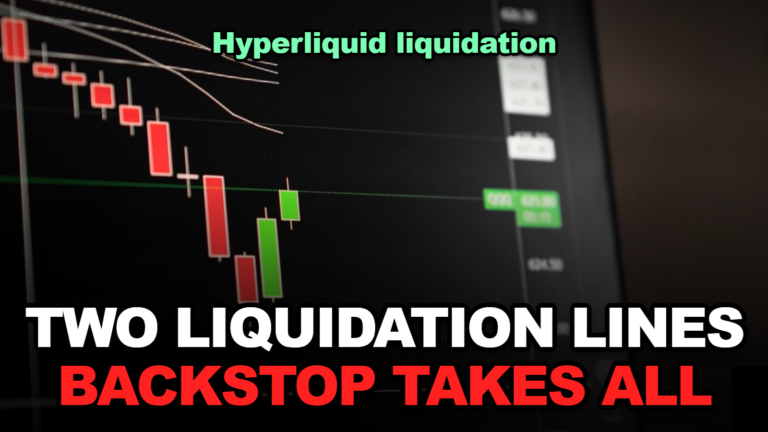
Auto-deleveraging (ADL) on Binance Futures is the final step in the liquidation process: it applies only when the Futures Insurance Fund cannot take over a bankrupt position, and it closes profitable positions of other traders against it, according to Binance’s support documentation.
In plain terms, a trader on the losing side ran out of margin faster than the market could absorb the loss. The shortfall has to land somewhere. If the insurance fund cannot cover it, winning traders on the other side get closed out.
Binance says ADL cannot be fully avoided given crypto volatility and high available leverage. It says it minimizes ADL but does not guarantee against it.
Who gets auto-deleveraged first?
On Binance Futures, positions are ranked by a score that multiplies profit percentage by effective leverage, so the most profitable, most leveraged winners are first in the queue.
The documented inputs: PNL % is unrealized profit divided by position notional; effective leverage is notional divided by account balance plus unrealized profit. If PNL % is zero or higher, score equals PNL % times effective leverage. If it is negative, PNL % is divided by effective leverage instead.
| Trader (hypothetical) | Notional | Unrealized profit | Balance | PNL % | Effective leverage | Score |
|---|---|---|---|---|---|---|
| A | $10,000 | $5,000 | $2,000 | 50% | 1.43x | 0.71 |
| B | $10,000 | $2,000 | $1,000 | 20% | 3.33x | 0.67 |
| C | $10,000 | $500 | $500 | 5% | 10x | 0.50 |
These are my own calculations using the formula in the documentation. Trader A, with the biggest gain, ranks ahead of C even though C carries more leverage. Profit weighs in as heavily as leverage.
Your real rank is shown as an indicator on each futures position, and it is measured against all users, so you cannot calculate it exactly from outside.

What happens to your position when ADL hits?
A position selected for ADL on Binance Futures closes at the bankruptcy price of the liquidated order it is matched with, with no trading fee, and you receive a notice with the amount and liquidation price.
Open orders are canceled too: across all tokens in cross margin mode, or for the same token in isolated margin mode.
The painful part is the price. The bankruptcy price may fall outside the contract’s current market range, so the close can be far less favorable than where your screen showed the mark price.
Why do coin-margined contracts face ADL more often?
Coin-margined contracts on Binance are more exposed to ADL than USD-margined ones because contracts using the same coin as collateral share a single insurance fund, which makes each fund smaller.
When I checked the documentation, I found that it does not publish fund sizes or replenishment rules on that page. So you cannot judge cushion from the doc alone. Look at the live insurance fund balance for your contract before leaning on a large winner.
How can you lower your ADL risk?
Lower effective leverage and realized profits both push a position down the ADL queue, since the score multiplies profit by leverage.
Take partial profit on a big winner. Add margin to reduce effective leverage. Watch the ADL indicator when volatility spikes, not only your PnL.
Binance also says Delta Neutral Account holders who meet its threshold get a lower ADL ranking on hedged positions.
The Part Most Traders Only Learn Once
Here’s the odd bit. You can be right on the trade, sit on a large profit, and still get closed out at a price you did not choose. Nobody shorted you. The system needed the other side.
I noticed that most explainers stop at the definition. The useful habit is checking the indicator before an event, not after.
Tips
- Check the ADL indicator on each open position before major news or weekend sessions.
- Take partial profit on large winners to lower both profit percentage and effective leverage.
- Look at the insurance fund balance for your contract before sizing up.
Warnings
- ADL cannot be fully avoided, and Binance does not guarantee against it.
- The close price can sit outside the current market range.
- This is not investment advice.
FAQ
Does Binance charge a fee when ADL closes my position?
No. According to Binance’s documentation, the profitable position is closed at the bankruptcy price of the liquidated order and no trading fee is charged.
Is ADL the same as liquidation?
No. Liquidation closes a losing position that ran out of margin, while ADL closes a profitable position only when the insurance fund cannot take over a bankrupt position.
Can I see my ADL risk on Binance?
Yes. Each futures position shows an indicator of its likelihood of ADL, and it displays a clear warning when ADL is imminent.
Sources
🔗 Related guides
Fact-checked against Binance Support documentation as of October 21, 2026. Worked examples are hypothetical. Not investment advice.