Fat Cat Card: How to Work Out KAST Reserve Rewards
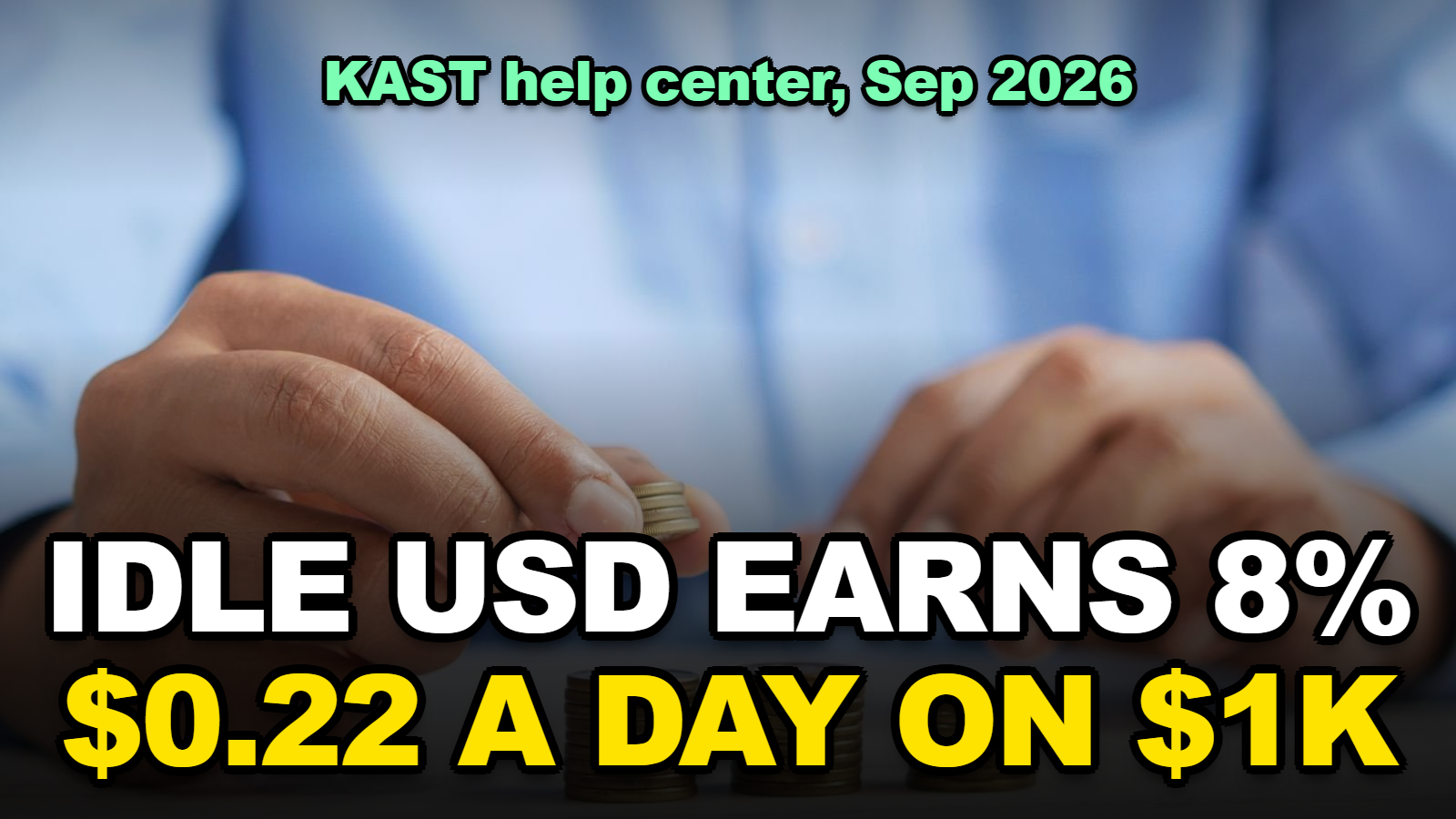
Short answer: KAST’s Reserve Account pays a daily promotional reward on idle USD balance. Under KAST’s help-center article updated September 14, 2026, the boosted rate is 8% a year for Standard members with no cap, 10% for Premium on the first $50,000, and 12% for Private on the first $200,000. The formula is balance × (rate ÷ 365) per UTC day. A $1,000 Standard balance earns about $0.22 a day; a $5,000 balance earns about $32.88 over a 30-day month. The boosted period ends June 30, 2027 or when total Reserve deposits reach $100 million, whichever comes first.
Most stablecoin cards leave the balance sitting at zero yield between top-up and spend. KAST added a Reserve Account that credits a daily reward on the USD you keep parked, while the money stays spendable from the card.
This post works out what that reward is actually worth at realistic balances, how spending drains it, and whether the higher Premium rate ever covers the $1,000 membership fee on Reserve alone. Card facts are from KAST’s help center on the dates shown; the side-by-side table across cards is on Fat Cat Card. Check it on Fat Cat Card
Educational content, not financial advice. KAST states that Reserve rewards are promotional, are not interest or yield, can change or end at any time, and that Reserve funds are not insured. Figures are from the cited help articles as read on November 1, 2026.
What This Works Out
- How does the KAST Reserve Account pay rewards?
- How much does a Reserve balance earn per day and per month?
- How does card spending reduce the reward?
- Does Premium’s 10% rate cover the $1,000 fee on Reserve alone?
- Why do KAST’s own articles show two different rate tables?
- The Reserve Set-Up Checklist
How does the KAST Reserve Account pay rewards?
KAST’s Reserve Account is a separate USD balance that earns a promotional cashback reward calculated daily on the eligible balance, credited to the USD Virtual Account at the end of each UTC day, according to KAST’s help article “How Does the KAST Reserve Account Work?” updated September 9, 2026.
The mechanics, as the article describes them: you add USD to Reserve, the balance stays available to spend with the card at any time with no lock-up, rewards accrue daily, and they land in the USD Virtual Account as cashback. KAST repeats several times that the rewards are “not interest, APY, yield, or an investment return” and that they are offered at KAST’s discretion.
The minimum eligible balance is $2, per the calculation article. Below that, no reward for the day.
| Tier (KAST help center, Sept 9 and Sept 14, 2026 articles) | Annual membership fee | Boosted Reserve rate | Reward cap | Balance above cap |
|---|---|---|---|---|
| Standard | $0 | 8% | no individual cap stated | — |
| Premium | $1,000 | 10% | first $50,000 | 8% |
| Private | $10,000 | 12% | first $200,000 | 8% |
The boosted period, per the September articles, runs until June 30, 2027 or until total Reserve deposits reach $100 million, whichever comes first. After that a standard rate applies, and KAST does not publish what it will be.
How much does a Reserve balance earn per day and per month?
At the Standard tier’s 8% boosted rate, a KAST Reserve balance earns balance × (0.08 ÷ 365) per full UTC day, so $1,000 earns about $0.22 a day and $5,000 earns about $1.10 a day, using the formula in KAST’s “How Are Reserve Rewards Calculated?” article updated September 14, 2026.
KAST’s own example is the $1,000 case: $1,000 × (8% ÷ 365) ≈ $0.22. The table below extends it. It is my arithmetic from the published formula, not a KAST figure, and it assumes the balance sits untouched for the full period.
| Reserve balance (own calculation, boosted rates) | Standard 8%, per day | Standard 8%, 30 days | Premium 10%, 30 days | Premium gain over Standard, 30 days |
|---|---|---|---|---|
| $500 | $0.11 | $3.29 | $4.11 | $0.82 |
| $1,000 | $0.22 | $6.58 | $8.22 | $1.64 |
| $5,000 | $1.10 | $32.88 | $41.10 | $8.22 |
| $20,000 | $4.38 | $131.51 | $164.38 | $32.88 |
| $50,000 | $10.96 | $328.77 | $410.96 | $82.19 |
A quick sanity check on the rounding: 30 days at $0.2192 a day is $6.58, and KAST says rounding happens daily, so the real credit may differ by a cent or two.
For a card balance that normally just waits to be spent, $6.58 a month on $1,000 is not nothing. It is also not a reason to park money you would otherwise keep in an insured account. KAST says plainly that Reserve funds are not insured and not risk-free.

How does card spending reduce the reward?
When a KAST card purchase is larger than the USD Virtual Account balance, eligible Reserve funds cover the difference, which lowers the Reserve balance and therefore the next day’s reward, according to KAST’s “What Happens When You Spend From Your Reserve Account?” article updated August 19, 2026.
KAST’s example: $30 in the USD Virtual Account, $80 in Reserve, a $50 purchase. The $30 goes first, then $20 comes out of Reserve, leaving $60 earning. Rewards are time-weighted inside the UTC day, so money withdrawn at noon UTC earns for roughly half that day.
When I checked the calculation article, I found that the segment formula is explicit: eligible balance × rate ÷ 365 × (hours held ÷ 24). So a $5,000 balance that drops to $3,000 at 12:00 UTC earns about $0.55 for the first half of the day and $0.33 for the second, $0.88 instead of $1.10.
The practical consequence: if you fund the USD Virtual Account with roughly what you plan to spend this week and keep the rest in Reserve, the Reserve balance stays steady and the reward is predictable. Letting purchases bite into Reserve is not a penalty, it just shrinks the base.
This part trips a lot of people up because the app shows Reserve as spendable, which it is. Spendable and reward-earning are the same dollars.
Does Premium’s 10% rate cover the $1,000 fee on Reserve alone?
On Reserve rewards alone, KAST Premium’s extra 2 percentage points (10% versus 8%) need a full $50,000 held for a full year to produce $1,000, which exactly equals the $1,000 annual Premium fee listed in KAST’s help center, so the Reserve boost by itself never beats the fee.
The arithmetic is short. Premium’s advantage over Standard is 2% on at most $50,000, because above the cap Premium drops back to 8%. Two percent of $50,000 is $1,000 a year, and that is the fee. Any balance below $50,000 leaves you behind. Any balance above $50,000 adds nothing to the gap.
| Average Reserve balance for a year (own calculation) | Premium extra reward vs Standard | Minus $1,000 fee |
|---|---|---|
| $10,000 | $200 | -$800 |
| $25,000 | $500 | -$500 |
| $50,000 | $1,000 | $0 |
| $80,000 | $1,000 (cap applies) | $0 |
Premium does other things, higher card cashback and a bigger monthly cashback cap among them, and the Premium break-even post works those out. Reserve is a tie-breaker at best, and only for someone already at the $50,000 cap.
Honestly, for most card users the Standard tier at 8% with no stated cap is the interesting number here.
Why do KAST’s own articles show two different rate tables?
KAST’s help center currently carries two versions of the boosted Reserve rates: the articles updated September 9 and September 14, 2026 list 8%, 10% and 12% with the boost ending June 30, 2027, while the “How Do Reserve Reward Caps Work?” article updated August 19, 2026 still lists 6%, 9% and 12% with the boost ending December 31, 2026.
I noticed that the caps article is older by about a month, and the two newer articles agree with each other, so this post uses the newer 8/10/12 figures. The 12% Private rate and the $50,000 and $200,000 caps are the same in both versions. If you are a Standard member, the difference matters: 6% versus 8% on $5,000 is $24.66 versus $32.88 a month.
You’ll probably notice the app shows the live rate, and KAST says the app is the authority. Check it before you move money, and check it again after June 30, 2027.
For how to get USD into the account in the first place, the ACH, wire and SEPA deposit post compares the funding rails and their fees.
The Reserve Set-Up Checklist
- Open the KAST app and confirm the current Reserve rate for your tier. Use the app number, not a help article, if they differ.
- Decide a weekly spend amount and keep that in the USD Virtual Account. Put the rest in Reserve.
- Keep at least $2 in Reserve; below that the day earns nothing.
- Move money before 00:00 UTC if you want the full day counted. Rewards are time-weighted inside each UTC day.
- Check the credited amount against balance × rate ÷ 365 once a week. Small rounding differences are normal; large ones are a support ticket.
- Put June 30, 2027 in your calendar. The boosted rate ends then or earlier if deposits hit $100 million.
Before you fund anything, compare KAST’s free-tier terms with the other cards side by side. Check it on Fat Cat Card
Tips
- Treat Reserve rewards as a reduction in the cost of holding a card balance, not as a savings product.
- Rewards land in the USD Virtual Account, so they get spent first on the next purchase unless you move them back.
- Fund in round amounts; the $2 minimum is easy to fall under after a purchase drains Reserve.
Warnings
- KAST says Reserve funds are not insured, not risk-free, and not a bank or savings account.
- Rates, caps and eligibility can change, pause or end at any time under KAST’s terms.
- This is educational content, not financial advice.
FAQ
How much does $1,000 in KAST Reserve earn?
At the Standard tier’s 8% boosted rate, $1,000 held for a full UTC day earns about $0.22, which is $1,000 × (0.08 ÷ 365), per KAST’s calculation article updated September 14, 2026. Over 30 days that is about $6.58.
Can I spend money that is in KAST Reserve?
Yes. KAST says Reserve has no lock-up, and when a card purchase exceeds the USD Virtual Account balance, eligible Reserve funds cover the rest automatically, which lowers the balance that earns the next day’s reward.
When does the boosted KAST Reserve rate end?
KAST’s September 2026 articles say the boosted introductory period ends on June 30, 2027 or when total Reserve deposits reach $100 million, whichever comes first, after which a standard rate applies.
Sources
- KAST Help Center: How Are Reserve Rewards Calculated? (updated September 14, 2026)
- KAST Help Center: How Does the KAST Reserve Account Work? (updated September 9, 2026)
- KAST Help Center: What Happens When You Spend From Your Reserve Account? (updated August 19, 2026)
- KAST Help Center: How Do Reserve Reward Caps Work? (updated August 19, 2026)
🔗 Related guides
Fact-checked against KAST’s help center as of November 1, 2026. Not financial advice.