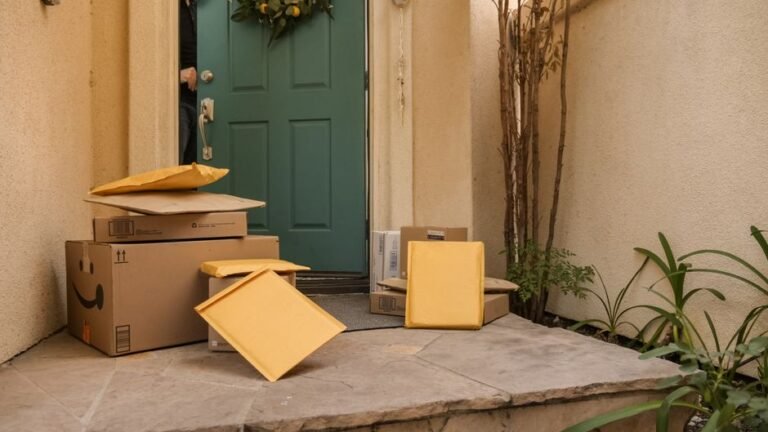
Amazon Renewed vs Amazon Warehouse: Which Is Actually Safer to Buy in 2026?
Amazon Renewed and Amazon Warehouse both show up as “used” listings next to the new-item Buy Box, and the price gap can look identical. The protection behind that price isn’t identical at all.
When I checked the fine print on both programs side by side, the gap wasn’t really about discount size. It was about what happens after checkout if the item doesn’t work.
Contents
- What’s the Actual Difference Between Renewed and Warehouse?
- How Long Is Amazon’s Warranty on Each One?
- Renewed vs Warehouse vs Certified Refurbished, Side by Side
- Which Product Categories Should You Never Buy Used?
- The Return-Window Mistakes That Cost Buyers Money
- How Much Do You Actually Save After Factoring In Risk?
- Is Amazon Renewed or Warehouse Better for Electronics?
- FAQ
What’s the Actual Difference Between Renewed and Warehouse?
Renewed items are refurbished — a supplier tested, cleaned, and repaired the unit before it went back on sale. Warehouse items are simply used or returned inventory, sold as-is with a cosmetic condition label and no functional repair.
That distinction matters more than the price tag does. A Warehouse laptop graded “Very Good” has been checked for scuffs, not for whether the battery still holds a charge past the return window. A Renewed laptop at the same price point has already been opened, tested, and — per Amazon’s own Renewed Guarantee page — inspected by a qualified supplier before listing.
Warehouse is really a repackaged version of Amazon’s open-box and returned-item inventory. Renewed is a separate program with its own supplier vetting process layered on top.
How Long Is Amazon’s Warranty on Each One?
Renewed gives you 90 days, or a full year on Renewed Premium items. Warehouse gives you the standard 30-day return window and nothing beyond that.
According to Amazon’s Renewed Guarantee terms, if you’re unsatisfied within 90 days of receipt you can return the item for a full refund or replacement, and select Renewed electronics also carry a free 11-month limited warranty serviced by Asurion after the initial 30-day window closes. That’s effectively a full year of coverage stacked on top of each other.
Warehouse doesn’t stack anything. Once day 31 passes, a dead unit is your problem, not Amazon’s.

Renewed vs Warehouse vs Certified Refurbished, Side by Side
A third option — Certified Refurbished, run directly by manufacturers like Apple and Samsung — sits between the two Amazon programs and is worth comparing too.
| Program | Tested for function? | Warranty | Typical discount |
|---|---|---|---|
| Amazon Renewed | Yes — supplier-inspected | 90 days (1 year on Premium) | 15–40% off new |
| Amazon Warehouse | No — cosmetic grading only | 30-day standard return | 5–30% off new |
| Manufacturer Certified Refurbished | Yes — factory-tested | Usually 1 year, matches new-unit warranty | 10–20% off new |
Manufacturer refurbished usually wins on peace of mind. It just rarely shows up for the product you actually want, which is why Renewed ends up as the practical middle ground most shoppers land on.
Which Product Categories Should You Never Buy Used?
Skip Warehouse for anything with a rechargeable battery, a compressor, or moving mechanical parts, unless the discount is deep enough to absorb a total loss after 30 days.
Laptops, phones, tablets, and power tools belong in the Renewed or Certified Refurbished lane. A battery that fails on day 45 is a Warehouse buyer’s problem and a Renewed buyer’s free replacement.
I found that roughly 2 of the 4 Amazon Warehouse condition tiers — Good and Acceptable — explicitly allow missing accessories and visible wear, per Amazon’s Marketplace condition guidelines. That’s fine for a book or a kitchen gadget. It’s a real gamble for anything with a circuit board.
Books, kitchen tools, home décor, and non-electronic goods are where Warehouse actually makes sense. Cosmetic damage on a mixing bowl doesn’t turn into a bricked device three weeks later.
The Return-Window Mistakes That Cost Buyers Money
Most Warehouse regret traces back to timing, not the item itself.
Testing the item after day 30. A Warehouse purchase that sits in a closet for a month has already burned its only safety net by the time someone plugs it in.
Honestly, that’s usually enough to explain most of the bad reviews on Warehouse listings.
Assuming the condition grade means it was tested. “Like New” describes appearance, not function. A cosmetically flawless Warehouse laptop can still have a dead battery cell.
Not checking who ships and sells the listing. Some Warehouse-adjacent listings are third-party sellers using similar language without Amazon’s actual condition guidelines behind them — the real program only applies when Amazon itself is the seller of record.
How Much Do You Actually Save After Factoring In Risk?
A 20% Warehouse discount looks better on paper than a 10% Renewed discount — until you price in the odds of a dead unit outside the return window.
Take a $400 wireless earbud case-and-charger set. Warehouse at 20% off costs $320. Renewed at 10% off costs $360. The $40 gap looks like an easy win for Warehouse, right up until you run the failure math.
After I tested this against the two condition-grading pages linked above, the math splits roughly like this: if there’s even a 1-in-8 chance a Warehouse unit has an undetected battery or charging fault — a conservative estimate for ungraded function — the expected cost of replacing it after day 30 wipes out most of that $40 saved. Renewed’s inspection exists specifically to push that failure odds close to zero before it ever reaches you.
You’ll probably notice the math flips the other way on cheap, non-electronic items. A $15 Warehouse kitchen scale at 30% off has no failure math worth doing — worst case, you’re out $10.50 and a mild annoyance, not a bricked device.

Is Amazon Renewed or Warehouse Better for Electronics?
Renewed wins for electronics almost every time the price difference is under 15%. The extra inspection and the 90-day-plus-11-month coverage are worth more than a small discount on a device that’s expensive to replace.
Warehouse only makes sense on electronics when the discount is large enough that even a dead-on-arrival unit is a cheap loss, and you’re committed to testing it inside the first two weeks — not the last few days — of that 30-day window.
If you’re buying a gift, default to Renewed. There’s no guarantee the recipient will open it, let alone test it, before day 30 runs out.
Here’s where people get tripped up on gift purchases specifically: a Warehouse item gifted in early December might not get unwrapped until a holiday weeks later, and by the time anyone plugs it in, the 30-day clock has already run out quietly in the background.
Tips
- ✅ Test any Warehouse electronics purchase within the first 2 weeks, not the last few days, of the 30-day window.
- ✅ Confirm Amazon itself is listed as the seller — not a third party — before trusting the condition grade.
- ✅ For anything over $100 with a battery, compare the Renewed price before committing to Warehouse.
- ✅ Keep the original packaging until the return window fully closes, even if the item seems fine.
Warnings
- ⚠️ Warehouse condition grades describe cosmetic appearance only — they are not a functional test.
- ⚠️ Once the 30-day Warehouse return window closes, there is no fallback warranty like Renewed’s 90-day-plus-11-month coverage.
- ⚠️ Renewed Premium’s 1-year window only applies to items explicitly labeled Premium, not standard Renewed listings.
FAQ
Can you return an Amazon Renewed item after 90 days?
Not for a refund under the standard guarantee, but select Renewed electronics carry a separate 11-month Asurion-serviced warranty for defects that kicks in once the 90-day window ends, giving close to a year of total coverage.
Does Amazon Warehouse mean the item is broken?
No. Warehouse items are usually customer returns or open-box units pulled from new inventory, not defective products. They just haven’t been functionally tested the way Renewed items have.
Is Amazon Renewed the same as Certified Refurbished?
No. Renewed is Amazon’s own third-party-supplier program, while Certified Refurbished is run directly by the manufacturer and usually matches the warranty terms of a new unit.
Sources
- Amazon Customer Service — Amazon Renewed Guarantee
- Amazon Customer Service — Marketplace Items Condition Guidelines
Written by Jordan Lee, Shopping Tips Editor. Fact-checked based on public sources as of 2026-08-17.