Dog Barking at Every Hallway Noise in Your Apartment? What Actually Helps
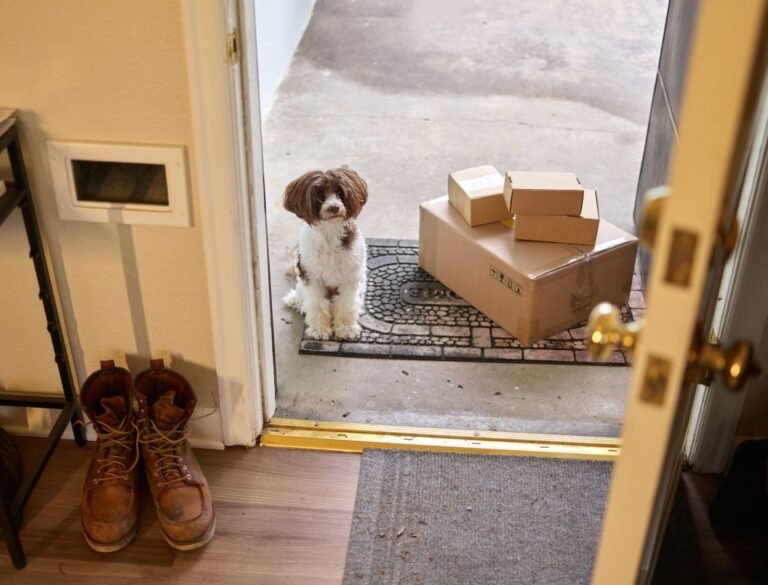
Your dog hits the door at full volume the second the elevator dings two floors down. Maybe a neighbor has already left a note, or the building manager called about a noise complaint. This is alert barking, and apartments are practically built to trigger it — thin walls, a shared hallway, an elevator, and dozens of strangers’ footsteps every single day.
Jump to a Section
- Why dogs alert-bark at hallway sounds
- Rule out pain, boredom, or full separation anxiety
- What actually helps
- Which sound-masking option is worth the money
- A two-week desensitization schedule
- Talking to neighbors before they complain
- FAQ
- Sources
Why Dogs Alert-Bark at Hallway Sounds and Elevator Dings
When I checked the ASPCA’s own breakdown of barking types against the threads apartment owners post on training forums, alarm barking and territorial barking kept overlapping in the same way, over and over. The elevator ding. Footsteps that stop right outside the door instead of passing by. A neighbor’s dog barking back through the wall.
Dogs hear far more than we do. A footstep two doors down registers as an actual event, not background noise the way it does for us.
Alarm barking is a response to a specific sound or sight, and it usually stops once the trigger stops — which is different from barking that continues long after you’ve left the apartment. That second pattern points somewhere else entirely, and it’s worth ruling out before you spend two weeks on the wrong fix.
Rule Out Pain, Boredom, or Full Separation Anxiety First
Alert barking, separation anxiety, and boredom-driven destruction get lumped together constantly, and the fixes for each one are not interchangeable. Time spent fixing the wrong problem is time your dog spends still stressed.
Separation anxiety-related barking happens mainly, or only, while you’re gone — it doesn’t need a trigger sound, and it’s usually paired with pacing, drooling, or damage near exits. We cover that pattern separately in How to Stop Your Dog Barking When Left Alone in an Apartment, and it’s worth reading first if your dog is quiet with you home and only loud once you’re not.
Boredom shows up differently again — chewing and general destruction with no sound trigger at all, often while you’re right there on the sofa. That’s closer to what we walked through in our guide to apartment dogs destroying things from boredom.
✅ Quick check — this is probably alert barking if:
- The barking starts right when a specific sound happens (door, elevator, footsteps) and mostly stops once it’s over.
- It happens whether you’re home or not.
- Your dog runs to the door or window, not in circles around the room.
One thing matters more than the rest of this list. A dog who suddenly starts alert-barking after months of being fine, with no change in the building, deserves a vet visit before any training plan — pain, hearing changes, and cognitive decline in older dogs can all show up first as a sudden spike in reactivity. This guide can’t diagnose that, and guessing wrong costs weeks.
What Actually Helps
None of these work in isolation particularly well. Stacked together, they usually do.
Desensitize to the Actual Trigger Sound
Record the real sound if you can — the elevator ding, the specific footstep pattern in your hallway — or find a close match online. Play it at a volume so low your dog barely reacts, then reward calm. Increase volume gradually across sessions, never within a single session.
Mask What He Can’t Un-Hear
If your dog can’t hear the trigger clearly, there’s nothing to alert-bark at. This is the fastest lever to pull while the longer desensitization work is still in progress — more on which option actually works below.
Manage the Sightline and the Door Zone
Move the bed or crate away from the front door and any shared wall. If your dog watches the hallway through a gap or a window facing a walkway, block that view. Removing the trigger’s visibility does a surprising amount of the work on its own.
Reward Quiet, Not the Bark
This is the part people skip. The moment the trigger sound happens and your dog looks at you instead of the door, that’s the behavior to reward — immediately, every time, for weeks. A large review of noise-related fear treatments found that owners who paired trigger sounds with food, games, or a quick training task reported success more than 70% of the time, well above management alone.

Mistakes That Undo the Progress
Checking who’s at the door mid-bark. Yelling over the noise, which sounds like joining in from a dog’s perspective. Only practicing during quiet hours and then being surprised it falls apart during a noisy Saturday. Punishing the bark after the trigger has already passed — your dog can’t connect a correction to something that happened ten seconds ago.
Which Sound-Masking Option Is Worth the Money
I noticed that most masking advice online just says “get a white noise machine” without saying which kind of noise actually blocks which kind of trigger. A dedicated hallway-facing hum isn’t solving the same problem as a doorbell.
| Option | Best against | Effort | Typical cost | Downside |
|---|---|---|---|---|
| Dedicated white noise machine | Steady hallway hum, footsteps, elevator | Plug in, leave on | $25–$45 | Weak against sharp doorbell-type sounds |
| Box fan or air purifier on low | General hallway noise | Already own one, maybe | $0 if you have one | Not loud enough alone in noisier buildings |
| TV or streaming ambient sound | Voices, footsteps, muffled conversation | Easy, but needs a screen on | $0 with existing subscription | Uses power all day, easy to forget running |
| Smart speaker white noise routine | Any trigger, plus auto-scheduling | One-time setup | Free if you already have a hub | Needs a working smart speaker — see our smart home hub comparison if you’re starting from zero |
| Free phone white noise app | Light background noise, travel or testing | Instant, no purchase | Free | Phone has to stay on and nearby all day |
The research on this is specific in a way most blog advice isn’t: the closer the masking sound matches the character of the trigger, the better it works. A steady hum covers footsteps and hallway chatter well. It does almost nothing for a sharp, sudden sound like a doorbell or a slammed door — that’s a desensitization problem, not a masking one.
A Two-Week Desensitization Schedule You Can Actually Follow
This part trips a lot of people up because they either skip it entirely or try to rush it in two days. Neither works. Here’s a version sized for a normal week.
| Days | Trigger volume | Session length | What to reward |
|---|---|---|---|
| 1–3 | Barely audible | 3–5 reps, 10 seconds each | Any glance at you instead of the door |
| 4–7 | Low but clearly audible | 5 reps, 15–20 seconds each | Staying quiet through the whole sound |
| 8–11 | Normal volume | 5–8 reps, spread across the day | Settling on a mat during the sound |
| 12–14 | Normal volume, unpredictable timing | Random real-life triggers, not recordings | Same calm response, no cueing needed |
Honestly, most dogs plateau somewhere around day 8 and it feels like nothing is working. It usually is working. Progress in this kind of training tends to show up in bigger jumps, not a smooth daily line — hold the volume level for a few extra days if a jump doesn’t land yet, rather than pushing louder.
Talking to Neighbors Before They Complain
A neighbor who knows you’re actively working on it is a lot more patient than one who assumes you don’t care. A short note or a five-minute hallway conversation — working on this, here’s my number if it’s a problem — does more than most people expect. It also gives you an early warning if the barking is worse than you think from inside the apartment.
If a formal complaint has already landed from building management, most leases treat an active, documented training effort very differently from silence. Save your desensitization log. It’s useful.
FAQ
How fast should I expect improvement?
Mild cases often improve in two to three weeks with daily short sessions. More entrenched barking, especially in a dog who’s been rehearsing it for months, can take six weeks or longer, and that’s normal, not a sign it’s failing.
My dog only barks at the elevator, nothing else. Do I still need the full schedule?
No. Narrow the recordings to just that sound and skip straight to it — a single-trigger dog usually moves through the schedule faster than a dog reacting to everything.
Is a bark collar a shortcut here?
It suppresses the sound without addressing why the dog is alarmed, and it does nothing for the stress underneath. Most trainers treat it as a last resort rather than a first move, and it’s not something this guide recommends starting with.
Sources
- 📌 ASPCA — Barking (types and triggers)
- 📌 ASPCA — Separation anxiety
- 📌 NIH/PMC — Therapy and prevention of noise fears in dogs (review)
Do this today: record the actual trigger sound if you can, or find the closest match, and run three ten-second reps at a volume your dog barely notices. Log whether he glanced at you or the door. That single data point tells you where to start tomorrow.
Educational information based on public sources as of August 2026. Not veterinary or professional dog-training advice. Sudden-onset, aggression-linked, or rapidly worsening barking should be assessed by a veterinarian or a certified dog behaviorist before starting a training plan.