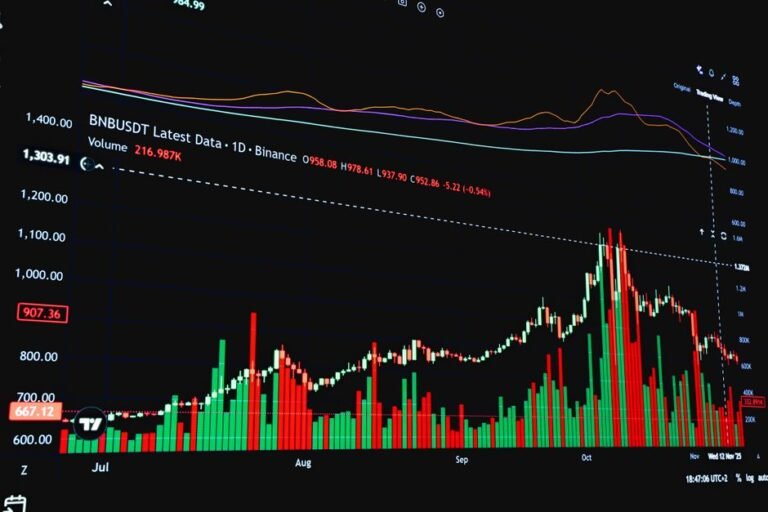

Crypto Futures Liquidated Before Stop-Loss Triggers: Why It Happens (2026)
On August 1, 2026, crypto futures traders lost more than $115 million in a single hour as volatility spiked across major exchanges, with 24-hour futures liquidations reportedly topping $321 million. A chunk of the traders caught in that wave had stop-losses set. Their positions still got liquidated first.
2026 Best Leverage Levels for Crypto Futures by Risk Tolerance
What This Covers
- Two Different Systems
- Why Mark Price Decides Liquidation
- What the August 1 Spike Actually Shows
- How Much Buffer You Actually Need
- Common Mistakes That Make It Worse
- Tips
- Warnings
- References
- FAQ
Your Stop-Loss and Your Liquidation Price Aren’t the Same System
A stop-loss is a request. You place it, and the exchange promises to try to fill it once price reaches your trigger. Liquidation isn’t a request at all — it’s the exchange forcibly closing your position because your margin fell below the maintenance level, and it overrides anything else sitting on your account.
Here’s where people get tripped up: they assume the stop-loss fires first because it was set at a “safer” price than the liquidation line. That’s usually true in calm markets. It stops being true the moment price moves fast enough that both levels get crossed inside the same second.
When I checked Bybit’s own help center explanation of this exact complaint, the answer wasn’t a glitch disclaimer — it was a straightforward description of how the dual-price engine is designed to work during a fast move. The stop-loss and the liquidation trigger are evaluated independently, and whichever one the price reaches first, or at the same instant, wins.
Why the Mark Price Decides Liquidation, Not the Price You’re Watching
Most retail traders watch the last-traded price on the chart. Liquidation doesn’t care about that number. Exchanges calculate a separate mark price — usually a blend of the index price across several spot markets plus a funding basis — specifically so that liquidations aren’t triggered by a single thin trade on one order book.
That sounds protective, and mostly it is. The catch is that mark price can still move fast during a genuine market-wide move, and once it crosses your liquidation threshold, the position closes regardless of what the last price or your stop order is doing a few dollars away.
When I compared how Binance and Bybit each describe this publicly, the mechanics line up closely even though the wording differs.
| Mechanic | Binance Futures | Bybit |
|---|---|---|
| What triggers liquidation | Mark price hitting the calculated liquidation price | Mark price hitting the liquidation price (dual-price system) |
| What triggers your stop-loss | Last price or mark price, depending on your order settings | Last price or mark price, selectable per order |
| Fast-move behavior | Mark price can gap past your calculated liquidation level in volatile conditions | Liquidation engine fires the instant mark price reaches the threshold, no grace window |
| Backstop if the position can’t close cleanly | Insurance fund, then auto-deleveraging | Insurance fund, then auto-deleveraging |
Same core idea, different order books. The insurance fund and auto-deleveraging layer only get involved once your position is already gone — they don’t prevent the liquidation itself.

What the August 1 Liquidation Spike Actually Shows
Reported liquidation totals crossed $115 million in a single hour on August 1, with the trailing 24-hour figure landing around $321 million across major venues. Numbers like this move fast between the moment I’m writing this and the moment you’re reading it, so treat the exact figure as a snapshot, not a fixed fact.
What matters more than the headline number is the shape of the move. Short squeezes and long liquidations tend to cascade — one batch of forced closes pushes price further, which triggers the next batch. I noticed that the pattern in this spike matched earlier 2026 events almost exactly: a relatively calm session, a sharp directional wick, then a burst of liquidations concentrated in a 30–60 minute window rather than spread evenly across the day.
That clustering is the actual danger for a stop-loss trader. It’s not the average daily move that catches people — it’s the 90-second window where mark price travels through both your stop and your liquidation level before your order has a real chance to fill at a reasonable price.
How Much Buffer You Actually Need, by Leverage
Higher leverage doesn’t just increase your potential loss — it shrinks the physical distance between your entry price and your liquidation price. That distance is your only real margin of error during a fast move.
| Leverage | Approx. distance to liquidation | Recommended stop-loss buffer above liquidation | Practical risk read |
|---|---|---|---|
| 3x–5x | ~20–33% | 5–8% above liquidation | Room to survive most single-hour spikes |
| 10x | ~10% | 3–4% above liquidation | A sharp wick can eat this buffer fast |
| 20x | ~5% | 1.5–2% above liquidation | Stop and liquidation are close enough to cross together |
| 50x+ | ~1–2% | Under 1% | Ordinary volatility can liquidate before your stop even registers |
These are rough, exchange-agnostic ranges based on standard maintenance margin tiers — not a guarantee for any specific pair or account. Your actual liquidation distance depends on your exchange’s maintenance margin bracket for that position size, so check the live calculator on your exchange before sizing a trade.
Honestly, the 20x-and-above row is where most of the “my stop-loss didn’t save me” complaints cluster. At that leverage, a routine 3–4% wick is enough to erase the entire gap.
Leverage decides how much room you have before the liquidation engine takes the trade away from you. Enter yours and see where liquidation lands, and where a stop would need to sit to matter at all.
Rough, exchange-agnostic arithmetic for planning, not financial advice. Real liquidation prices depend on maintenance margin, fees, funding, and whether you are on isolated or cross margin, and a mark-price gap can jump straight past the level shown here.
Common Mistakes That Make It Worse
A few habits show up again and again in the traders who get caught by this. None of them are exotic — they’re just easy to overlook when a trade is already open and moving.
Placing the stop right next to the entry, not the liquidation price. A stop set for a “tight” 2% loss on a 20x position can sit closer to your liquidation line than you think, because liquidation distance shrinks with leverage, not with your stop placement. Measure the gap from your stop to your liquidation price, not from your stop to your entry.
Switching to cross margin mid-trade to “buy time.” Cross margin pulls in your entire account balance to delay liquidation on a losing position. That can work. It can also mean one bad trade drags down capital that was supposed to be sitting safely on the sidelines for a different position entirely.
Ignoring the funding rate right before a scheduled event. A sharply negative or positive funding rate is a signal that positioning is lopsided — when I found that funding had flipped hard negative ahead of past volatility spikes, it usually meant the market was already crowded on one side, which is exactly the setup that produces fast, cascading moves. Checking the funding rate on your exchange before a major data release or announcement takes under a minute.
Assuming the leverage number tells you the whole story. A 10x position and a 20x position on the same exchange don’t always sit in the same maintenance margin bracket once size is factored in. Bigger notional value often gets bumped into a higher-margin tier automatically, which moves your real liquidation price closer than the leverage slider suggests.
Tips
- ✅ Set your stop-loss on mark price, not last price, if your exchange offers the choice — it keeps both systems reading from the same number.
- ✅ Leave real distance between your stop and your calculated liquidation price. A stop sitting 0.3% above liquidation isn’t a safety net, it’s a coin flip.
- ✅ Reduce position size instead of raising leverage when you want more room — it moves your liquidation price further away without changing your dollar risk much.
- ✅ Check your exchange’s maintenance margin tier for your position size before you open it. Bigger positions often sit in a higher-margin bracket, which moves liquidation closer than the headline leverage number suggests.
Warnings
⚠️ Stop-loss orders are not a liquidation guarantee. During fast, thin, or gap-like moves, your position can be liquidated at a worse price than your stop, or before your stop fills at all. ⚠️ Leverage amplifies both gains and losses, and high-leverage positions carry a meaningfully higher chance of forced liquidation during ordinary market volatility, not just extreme events.
This article is for informational purposes only and is not financial or investment advice. Crypto futures trading carries a high risk of loss, and past liquidation patterns don’t predict future ones. Confirm your exchange’s specific liquidation and margin rules before trading with real capital.
References
- Binance — Binance Futures Liquidation Protocols (official support FAQ)
- Bybit Help Center — Why Was My Position Still Liquidated?
- CFTC — Customer Advisory: Understand the Risks of Virtual Currency Trading
- BitcoinWorld — Crypto Futures Liquidations Surpass $115 Million In One Hour (Aug 1, 2026)
FAQ
Can I set my stop-loss to use mark price instead of last price?
On most major exchanges, yes — it’s usually a toggle in the order type settings. Using mark price for your stop keeps it aligned with the same number the liquidation engine watches.
Does a stop-loss order fee differ from a liquidation fee?
Yes. A stop-loss that fills normally pays your regular taker or maker fee. A liquidation typically carries a separate, higher liquidation clearance fee on top of the loss itself.
Is isolated margin safer than cross margin for this specific problem?
It limits how much of your account a single liquidation can wipe out, but it doesn’t change the underlying issue — mark price can still reach your liquidation level before your stop fills, in either mode. See our isolated-vs-cross comparison for the fuller picture.
🔗 Related guides
This article is for informational purposes only and is not investment advice. Fact-checked based on public sources as of August 1, 2026.