Google Drive Says Storage Full But It Isn’t: 4 Hidden Culprits
📋 In This Guide

Google says your storage is full. Your own math says otherwise. You scroll through My Drive, add up a handful of documents and a few folders of photos, and land nowhere near 15 GB — yet uploads are blocked and Gmail is threatening to stop receiving mail. Who is right? Google, unfortunately. But the discrepancy is not a bug: the storage meter counts several categories of data that the ordinary Drive file list never shows you. Once you know where those categories hide, reclaiming the space usually takes minutes, not hours.
Start With the Real Numbers
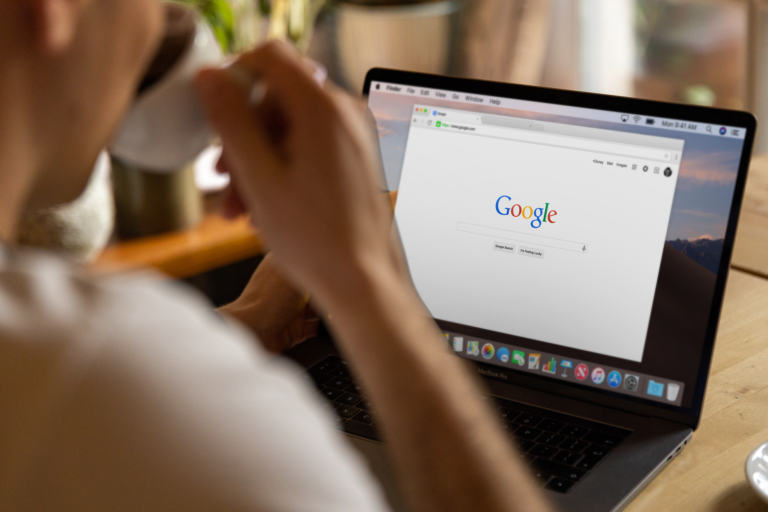
Before deleting anything, look at the actual breakdown. Open drive.google.com/drive/quota in a browser (or Google One’s storage page) and you will see your usage split across Drive, Gmail, and Google Photos — because all three services draw from one shared pool, as Google explains in its guide to managing storage in Drive, Gmail and Photos. The quota page also lists your Drive files sorted from largest to smallest, which is worth a skim on its own. If the three-way breakdown already accounts for your missing gigabytes — say, 9 GB sitting in Gmail — you know exactly which culprit below to jump to. If the numbers still look wrong, work through all four in order.
The 4 Hidden Culprits (and How to Clear Each One)
Culprit 1: The Trash Still Counts Against You
Deleting a file does not free its space — it just moves the file to the Trash, where it keeps counting against your quota for up to 30 days. Google’s own documentation on deleting files in Drive confirms trashed files are only removed forever after 30 days or when you empty the Trash yourself. Open Drive, click Trash in the left sidebar, and hit Empty trash. Then do the same in Gmail: the Trash and Spam folders there count too, and years of accumulated deleted mail adds up fast. Do not forget Google Photos’ trash, which holds deleted photos for up to 60 days. On accounts that have read as “full” for weeks, emptying all three trash bins is routinely enough on its own to recover several gigabytes without touching a single live file. This is the first stop for a reason — it is free space you already decided to give up.
Culprit 2: Orphaned Files You Own but Cannot See
Files can count against your storage even when they appear nowhere in My Drive. The key rule: quota follows ownership, not location. If someone deletes a shared folder that contained files you uploaded, your files are not deleted — they become orphaned, still owned by you, still counting against you, but invisible in the normal folder tree. To find them, type is:unorganized owner:me into the Drive search bar. Anything that appears can be dragged back into My Drive (to keep it) or deleted (to reclaim the space — remember to empty the Trash afterward). The same ownership rule explains another surprise: files you upload into somebody else’s shared folder consume your quota, not theirs. If you have been dropping large videos into a family or team folder for years, that space is all yours. Either delete what is no longer needed or ask the folder owner to make copies so ownership transfers away from you.
Culprit 3: Gmail and Google Photos Are Draining the Same Pool
Your 15 GB is not a Drive quota — it is an account quota shared with Gmail and Google Photos. This is the single most common reason “empty-looking” Drives read as full. In Gmail, search has:attachment larger:10M to surface the heavyweight messages, delete the ones you no longer need, and empty Gmail’s Trash. In Google Photos, check your backup quality setting: photos and videos backed up in Original quality consume storage rapidly, and since June 2021 even Storage saver uploads count against the shared pool. Photos offers a one-click option to convert existing Original-quality items to Storage saver, which can free a surprising amount in one pass. If the quota page showed Photos or Gmail dominating your usage, an hour spent here beats any amount of Drive housekeeping.
Culprit 4: Hidden App Data
Third-party apps connected to your Google account can store data in a hidden section of Drive that never appears in your file list. Backup tools, note apps, some games, and messaging apps (WhatsApp backups on Android are the classic example) all stash data this way. To see it, open Drive in a browser, click the gear icon > Settings > Manage apps. Any app storing hidden data shows the amount next to its name; use the Options menu beside it to delete the hidden data you no longer need. If you would rather have guided cleanup, Google One’s storage manager walks through removable items across your whole account — Google’s page on cleaning up your Google storage covers it. Be deliberate here: deleting a messaging app’s hidden backup means its next restore has nothing to restore from.
Culprit Cheat Sheet
| Culprit | Where it hides | How to reclaim it |
|---|---|---|
| Trashed files | Drive, Gmail, and Photos trash bins | Empty all three manually |
| Orphaned / shared-folder files | Outside the visible folder tree | Search is:unorganized owner:me, then delete or re-file |
| Gmail + Photos usage | Same quota pool as Drive | Delete large attachments; convert Photos to Storage saver |
| Hidden app data | Settings > Manage apps | Delete per-app hidden data |
Tips
- Freed space does not always show up instantly. Give the meter time — changes can take from a few minutes up to about a day to fully register.
- Download anything sentimental before deleting it. Drive’s export works in bulk via Google Takeout.
- Repeat the quota-page check after each culprit so you can see exactly which fix moved the needle.
Warnings
- Emptying the Trash is permanent. Once emptied, files are generally unrecoverable, so review the contents before you click.
- Deleting emails in Gmail removes them everywhere — from every device and any connected IMAP client, not just the web interface.
FAQ
Do files other people share with me count against my storage?
No. Shared files count only against the owner’s quota. You can safely keep anything in “Shared with me” without using a byte of your own space — but the mirror image is also true: files you own count against you even when they live in someone else’s folder.
I deleted files and emptied the Trash. Why is storage still full?
Two usual reasons: the meter has not caught up yet (allow up to 24 hours), or the space was never in Drive to begin with — check the quota breakdown again, because Gmail and Photos are often the real occupants.
Does upgrading to Google One solve this?
It raises the ceiling rather than fixing the leak. The paid pool is still shared across Drive, Gmail, and Photos, so if hidden app data or Original-quality photo backups caused the problem, they will eventually fill the bigger plan too. Clean up first, then decide whether you genuinely need more room.
Sources
- Google Drive Help — Manage your storage in Drive, Gmail and Photos
- Google Drive Help — Delete files in Google Drive
- Google One Help — Clean up and fix issues with your Google storage
📚 Related reading
- How to Set Up Auto Mode on a Smart Air Purifier for Real-Time Air Quality
- 2026 Best Smart Thermostats Compared by Climate Zone
- How to Reduce Your Smart Home’s Standby Power Usage