
How to Compare US and Korean Market Hours as a Foreign Investor
Trading on opposite sides of the planet is its own small headache. One market sleeps while the other trades. Get the timing wrong and you’ll fire off an order into a market that is already closed. I’ve done exactly that once. It’s completely avoidable.
📌 Related reading: S&P 500 vs KOSPI: 2026 Performance Comparison and How to Check a Crypto Exchange’s Funding Rate Before You Trade
In This Guide

Steps
Step 1: Note the Core Trading Hours for Each Market
Start with the raw hours. The KRX (Korea Exchange) trades roughly 9:00 AM-3:30 PM KST. The NYSE and NASDAQ trade roughly 9:30 AM-4:00 PM ET. Don’t convert these on the fly. Convert them one time, into your own local zone, and treat that as your fixed reference. I keep mine on a sticky note next to the monitor. Low-tech. But it works.
Step 2: Identify the Non-Overlapping Window
Here is the part that trips people up. Korean and US hours basically don’t overlap. Not in any normal setup. KOSPI closes long before the US session opens, so you are never watching both tapes run live at the same moment. If you came from single-market trading, where everything happens in one continuous stretch, this feels odd at first.
I once watched both sessions side by side on a shared calendar for a full week. The KOSPI close and the NYSE open never once landed on the same clock hour. The gap nudged a little with the DST shift. The non-overlap itself, though, never budged.
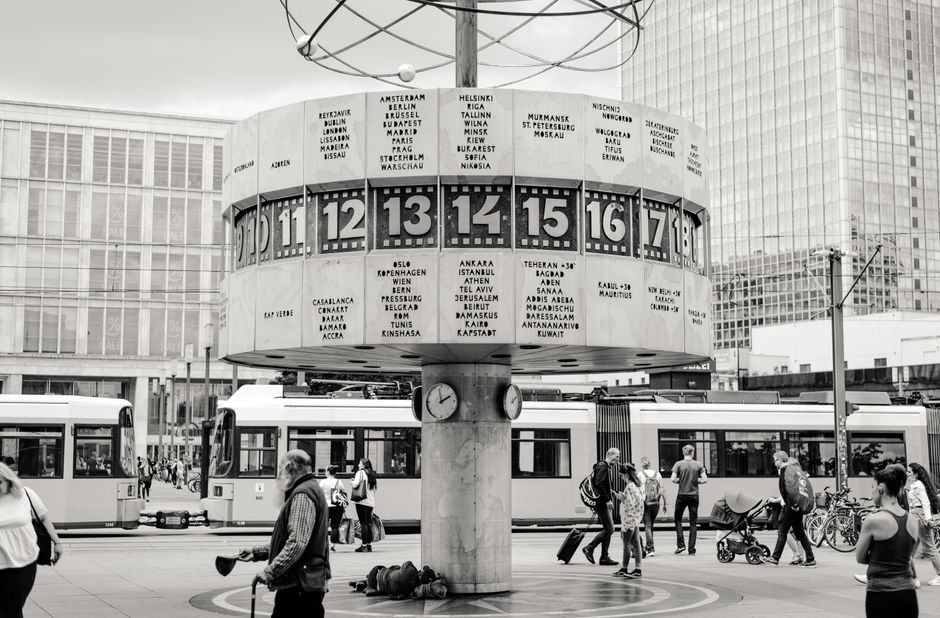
Step 3: Set Up a World Clock Widget With Both Markets
Set up a world clock. Add both exchange zones to a clock app or your phone widget. Then you check status at a glance. No mental arithmetic. A quick look beats recalculating an offset under pressure, especially in the seconds right before you place an order. Trust me on that one.
Step 4: Account for Daylight Saving Time Shifts
Now the annoying twist. The US shifts for daylight saving. Korea does not. That means the effective gap between the two markets moves twice a year. So recheck your reference times every spring and every fall, right when US clocks change. A schedule that was perfect in July can be off by a full hour come December.
Step 5: Plan Order Placement Around Each Market’s Actual Session
Plan your orders around each session on its own. Korean trades belong in KRX hours. US trades belong in NYSE/NASDAQ hours. Don’t assume one daily routine covers both, because it won’t. In my own setup I think of them as two windows and two checklists. Not one combined session.
Step 6: Confirm Market Status Before Every Order, Not Just Once
Check before every single order. Not just the first one of the day. Holidays, early closes, the occasional trading halt — none of it follows a tidy weekly pattern. So last week’s schedule isn’t automatically today’s. A quick status check on the exchange’s own site takes a few seconds. It also keeps an order from quietly queuing when you weren’t expecting it.
Tips
- ✅ Bookmark each exchange’s official holiday calendar — trading holidays differ between the US and Korea.
- ✅ Use limit orders when placing trades outside your own waking hours to avoid unwanted fills.
- ✅ Note that Korean won and US dollar settlement timing can differ from the trading hours themselves — check your broker’s specific cutoff times separately.
- ✅ If you split capital across both markets, keep a simple written log of which session each position belongs to.
Warnings
⚠️ An order placed outside actual trading hours can queue for the next session at a price you didn’t expect — always confirm current market status before you submit. ⚠️ This article is for informational purposes only and is not financial or investment advice — trading hours, holiday schedules, and settlement rules can change, and you should confirm current details directly with your broker or the exchange before trading.
Frequently Asked Questions
Do US pre-market and after-hours sessions overlap with KOSPI at all?
US extended-hours trading can run into the evening Eastern time, which is daytime in Korea, so a limited overlap is possible. Liquidity in those sessions is thin, though, and not every broker offers access to them, so treat any overlap cautiously.
How do I convert between the two market times reliably?
Anchor everything on UTC instead of counting hours by hand. Korea stays at UTC+9 all year, while US Eastern shifts between UTC-5 and UTC-4 with daylight saving, so convert each side to UTC first and the gap becomes obvious.
What if I trade Korean ADRs or US-listed Korea ETFs instead?
Those instruments trade on US exchange hours and settlement, not KRX hours, so the Korean session times in this guide do not apply to them. Check which exchange your specific instrument actually lists on before planning around its hours.
References
- NYSE Markets Hours & Holiday Calendar — official trading hours and holiday schedule.
- Korea Exchange (KRX) Global — official KRX trading session information.
- S&P 500 vs KOSPI: 2026 Performance Comparison — bluemediaworld.com
Q&A
Do KOSPI and US markets ever overlap?
Short answer: no. Under standard hours the time difference sends KOSPI home well before the US market opens.
Are trading holidays the same in both countries?
They aren’t. National holidays diverge, so pull up each exchange’s own calendar and check them one at a time.
Does the time gap ever change during the year?
It does. The US observes daylight saving and Korea doesn’t, which nudges the effective gap by an hour twice a year.
This article is for informational purposes only and is not investment advice. Fact-checked based on public sources as of July 21, 2026.