Can You Run a Space Heater on a Smart Plug? What the 15-Amp Rating Leaves Out (2026)
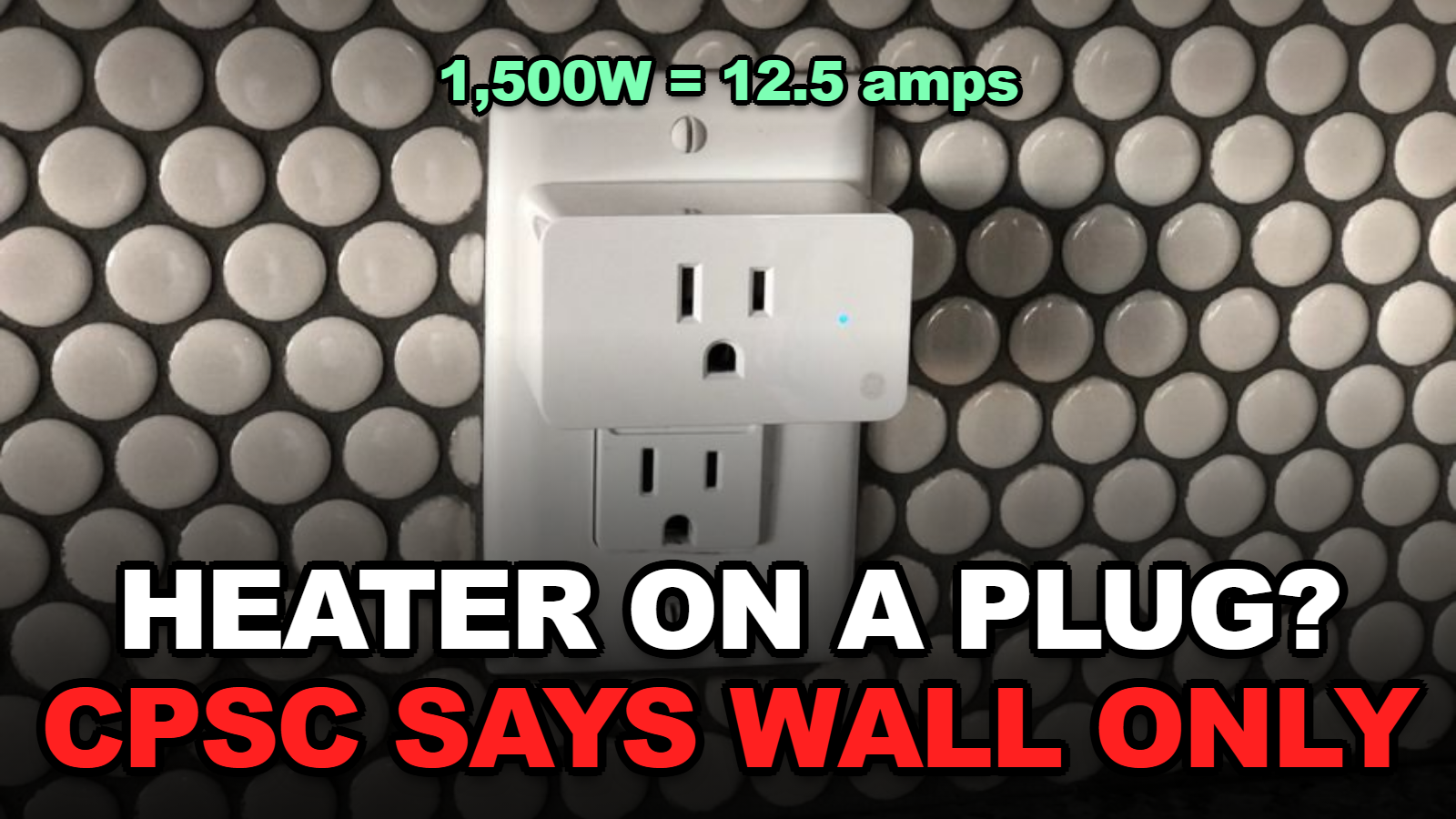
Short answer: The CPSC says to plug space heaters directly into a wall outlet. Not into a power strip or extension cord. A smart plug sits in that same in-between spot. A typical 1,500-watt heater draws about 12.5 amps. That’s already over the 80% continuous-load limit TP-Link recommends for its 15-amp plugs. If you want a heater on a schedule, buy one with a built-in timer or app.
Every fall, the same idea shows up in smart home forums. Put the space heater on a smart plug, set a schedule, and walk into a warm room.
It’s a reasonable idea. The box on most smart plugs even says 15 amps, and a 1,500-watt heater is under that.
Here’s why “under the rating” isn’t the same as safe, what the actual numbers look like for common heater settings, and the setups that get you the same convenience without the risk.
Jump to a Section
- What Does the CPSC Say About Space Heaters and Plugs?
- Is a 1,500-Watt Heater Too Much for a 15-Amp Smart Plug?
- Heater Wattage vs. Smart Plug Load, Side by Side
- Will the Heater Even Turn Back On When the Plug Does?
- What’s a Safer Way to Put a Heater on a Schedule?
- Tips
- Warnings
- FAQ
- Sources
What Does the CPSC Say About Space Heaters and Plugs?
The US Consumer Product Safety Commission tells consumers to “always plug electric space heaters directly into a wall outlet and never into an extension cord or power strip, to prevent overloading and causing a fire,” according to its winter heating safety warning.
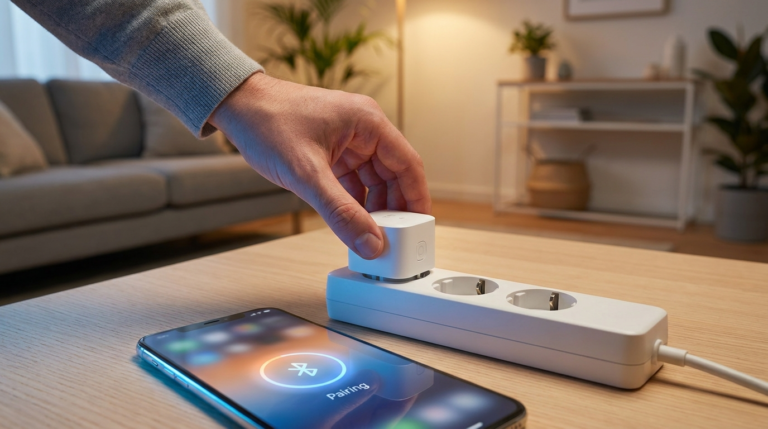
The CPSC doesn’t name smart plugs. But a smart plug does the same thing an extension cord does. It adds another set of contacts between the heater and the wall, and all of the heater’s current runs through it.
The stakes are real. The CPSC estimates portable heaters were involved in about 1,700 fires a year from 2017 to 2019, with an average of 70 deaths and 160 injuries annually.
The US Fire Administration adds a sharper number. On its heating fire safety page, USFA says portable heater fires were only 3% of home heating fires from 2017 to 2019, but they accounted for 41% of fatal home heating fires.
Rare, but deadly when they happen. That’s the context for everything below.
Is a 1,500-Watt Heater Too Much for a 15-Amp Smart Plug?
A 1,500-watt space heater on a 120-volt US outlet draws about 12.5 amps, which is under a 15-amp smart plug’s maximum but above the 80% limit (12 amps) that TP-Link recommends for continuous long-term loads on its Kasa and Tapo plugs.
That 80% figure isn’t something I made up for this article. When I checked TP-Link’s support FAQ on what loads its plugs can handle, I found that it says heaters are a supported “resistive” load. Then it adds: for “continuous long-term operation, please keep the total connected load at 80% or less of the maximum rated power.”
A space heater on high, running for hours on a cold night, is exactly that kind of load.
So the honest answer from the manufacturer’s own guidance is: low setting, probably within spec. High setting, over the recommended continuous load.
There’s a second issue the rating doesn’t show. Heat builds up at every connection point. The wall outlet, the smart plug’s prongs, the relay inside it, and the heater’s own plug all warm up under a heavy load. A worn outlet that holds a plug loosely makes it worse.
If you’ve ever felt a heater’s plug come out of the wall warm, you know what this looks like.
Heater Wattage vs. Smart Plug Load, Side by Side
When I compared common heater settings against a standard 15-amp smart plug, I noticed that only the high setting on a full-size heater crosses TP-Link’s 80% line. The problem is that high is the setting most people use on a cold night.
| Heater draw | Amps at 120V | Share of a 15A plug | Within 80% continuous guidance? |
|---|---|---|---|
| 750 W (typical low setting) | 6.25 A | 42% | Yes |
| 1,000 W | 8.3 A | 56% | Yes |
| 1,440 W | 12.0 A | 80% | Right at the limit |
| 1,500 W (typical high setting) | 12.5 A | 83% | No |
| 1,500 W on a 10A-rated plug | 12.5 A | 125% | No, over the maximum |
Table: our calculation (amps = watts ÷ 120 volts) against TP-Link’s published 80% continuous-load recommendation, October 2026. Check your own plug’s rating on its label or spec page; not every plug is rated 15 amps.
Look at the last row. Some compact plugs, especially older or international models, are rated lower than 15 amps. Read the label before you assume.
Will the Heater Even Turn Back On When the Plug Does?
Many space heaters with push-button or electronic controls do not resume heating when power is restored, so a smart plug schedule can switch the outlet on while the heater itself stays off.
This is the part that trips up a lot of people.
A heater with a simple mechanical dial usually comes back on when power returns, because the switch never moved. A heater with a digital panel often resets to standby and waits for you to press the power button. The smart plug clicks on at 6 a.m. Nothing happens.
Test it once before you trust it. Turn the heater on, switch the smart plug off and back on, and see what the heater does.
Notice the irony, too. The heaters that do resume on their own are the ones that will also switch on unattended after a power blip, with whatever is sitting in front of them.
What’s a Safer Way to Put a Heater on a Schedule?
The safer way to schedule a space heater is to use one with a built-in timer, thermostat, or Wi-Fi app, plugged directly into a wall outlet, so no extra device sits between the heater and the outlet.
Here are your options, from easiest to most involved:
- Use the heater’s own timer. Many mid-range heaters have an auto-off timer and a built-in thermostat. That covers “don’t leave it running all night.”
- Buy a heater with app control. Several brands now sell heaters with Wi-Fi and their own scheduling. The heater manages its own load and safety cutoffs.
- Fix the real problem. If one room is always cold, a smart thermostat schedule, a vent adjustment, or sealing a drafty window may beat a heater entirely. Our guide to smart thermostats that won’t turn on the heat covers the scheduling side.
- For baseboard or wall heaters, use a line-voltage smart thermostat installed by an electrician. Those are built for heating loads. A regular smart plug or light switch isn’t.
Honestly, the app-controlled heater is usually the cheapest fix once you add up a decent smart plug plus the risk.
Tips
- Plug the heater into a wall outlet with nothing else large on the same circuit. Microwaves, hair dryers, and kettles add up fast.
- Touch-test the plug after 30 minutes on high. Warm is normal. Hot means stop using that outlet and have it checked.
- Look for a heater with tip-over and overheat shutoff, and a safety certification mark from a lab like UL, ETL, or CSA.
- If you do use a smart plug for a low-wattage heater, keep it on the low setting and in a room you’re in.
Warnings
- Never run a space heater through a power strip or extension cord, smart or not. The CPSC is clear on this.
- Keep heaters at least three feet from bedding, curtains, and furniture, and turn them off when you leave the room or go to sleep.
- A smart plug that’s discolored, melted, or smells hot should be thrown out, not reused.
- This article is general safety information, not electrical advice. Have an electrician check outlets that feel loose or warm.
FAQ
Can I use a heavy-duty smart plug for a space heater?
Some plugs are sold as heavy-duty, but the CPSC still advises plugging space heaters directly into a wall outlet. A higher rating reduces the load percentage. It does not remove the extra connection point.
Is it safe to put an oil-filled radiator heater on a smart plug?
Oil-filled heaters often draw the same 1,500 watts on high as other space heaters, so the same 12.5-amp math applies. The same direct-to-wall advice applies too.
Can I use a smart plug just to monitor how much power my heater uses?
That still routes the heater’s full current through the plug. If you want to measure usage, do it briefly on the low setting while you are in the room, then plug the heater back into the wall.
Sources
- US Consumer Product Safety Commission — Winter heating safety warning
- US Fire Administration — Heating Fire Safety
- TP-Link — What Loads Can Be Connected to the Tapo/Kasa Plug
🔗 Related guides
Fact-checked against the US Consumer Product Safety Commission, the US Fire Administration, and TP-Link’s published load guidance as of October 3, 2026. General safety information only; follow your heater’s and plug’s manuals.