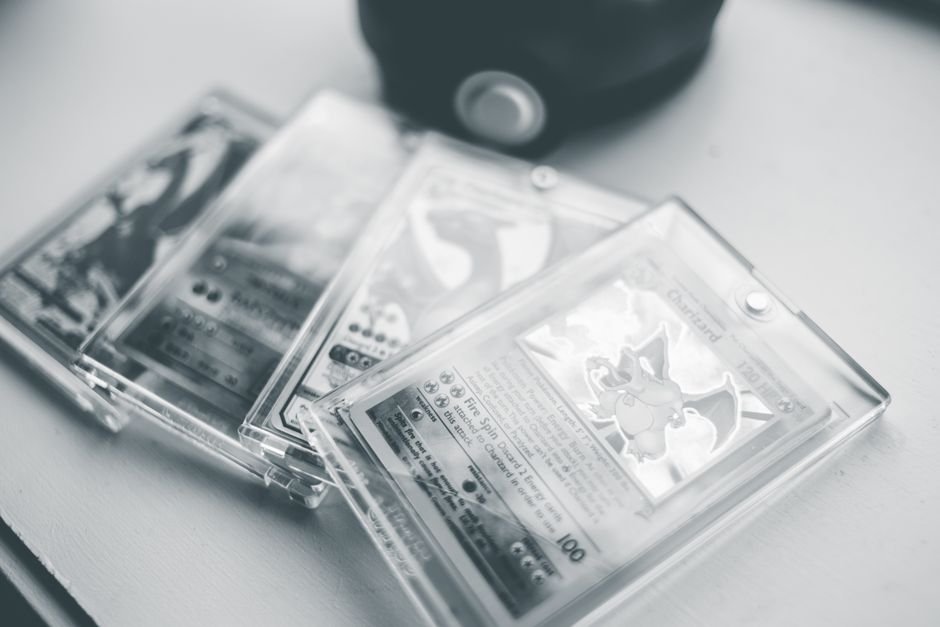
PSA Crossover Math: When the New $599 Fee Pays Off
PSA’s new Crossover pricing turns a flat $999 gamble into a $599 bet plus a $400 bonus fee you only pay on a win, and that changes how likely a card has to be to cross before it is worth sending.
Short answer: PSA says that beginning November 11, 2026, new Crossover submissions at Premium 1 and higher pay a $599 Evaluation Fee whether or not the card crosses. A Successful Crossover Fee is added only on a win. At Premium 1 that is $400, so a win costs $999 and a miss costs $599. If a cross adds $2,000 to the resale value, the break-even odds drop from 50% to about 37%.
Not investment advice. Fees are PSA’s published figures as of November 16, 2026. The resale values and odds in the tables are made-up inputs for arithmetic, so replace them with your own comps.
Jump to a Section
- What did PSA change about Crossover pricing on November 11?
- How likely does a cross have to be to break even?
- What does the break-even table look like at different card values?
- Which cards are poor Crossover candidates?
- Your Five-Line Check Before Submitting
What did PSA change about Crossover pricing on November 11?
PSA now splits Crossover pricing at Premium 1 and above into an Evaluation Fee charged regardless of outcome and a Successful Crossover Fee charged only if the card crosses, according to PSA’s staff announcement dated November 11, 2026.
Crossover is the service where you send in a card already graded by another company and name the lowest PSA grade you will accept. If the card meets it, PSA removes it from the old holder and encapsulates it. If not, the card goes back to you in its original holder.
PSA’s own example uses Premium 1 for standard Crossover, which covers cards with a Maximum Insured Value of up to $25,000. Before: $999 either way. Now: $599 plus $400 on a successful cross, which is still $999, or $599 on a miss.
When I checked PSA’s announcement, I found that it says the $599 Evaluation Fee applies to all five Premium service levels, but it only prints the $400 success fee for Premium 1. I could not find the success fees for the other four levels in the post, so this article does the math for Premium 1 only.
Two more details from the same page. No money is due up front, and PSA charges your payment method on file once grading is done, plus shipping and other fees. And Express, Super Express and Premier Crossover stay on existing pricing.

How likely does a cross have to be to break even?
A PSA Premium 1 Crossover breaks even when your odds of crossing, multiplied by the extra resale value a PSA slab adds, cover the $599 Evaluation Fee plus $400 for each win.
Here is the formula. Let G be the extra money you expect after selling fees if the card crosses, compared with selling it in its current holder. Let p be your honest chance of crossing. Expected result = (p x G) – $599 – ($400 x p). Setting that to zero gives break-even odds of $599 / (G – $400).
The old flat fee gives $999 / G. Same card, same upside, very different bar.
A worked case. Say G is $2,000 and you think the card has a 40% shot. New pricing: 0.40 x $2,000 = $800 expected gain, minus $599, minus $160 (0.40 x $400) = about +$41. Old pricing: $800 minus $999 = about -$199. The card did not change. The fee structure moved a losing bet to a slightly positive one.
It is a thin edge, and that is the point. Thin edges disappear when the odds are a little worse than you guessed.
What does the break-even table look like at different card values?
For a card that gains $2,000 in resale value after crossing to PSA, the break-even chance of success is about 37% under the new Premium 1 pricing and 50% under the old flat $999 fee.
| Extra value if it crosses (G) | Old break-even odds ($999 flat) | New break-even odds ($599 + $400 on a win) | Cost of a miss, old vs new |
|---|---|---|---|
| $1,200 | 83.3% | 74.9% | $999 vs $599 |
| $1,500 | 66.6% | 54.5% | $999 vs $599 |
| $2,000 | 50.0% | 37.4% | $999 vs $599 |
| $3,000 | 33.3% | 23.0% | $999 vs $599 |
| $5,000 | 20.0% | 13.0% | $999 vs $599 |
Own calculation from PSA’s published Premium 1 fees. Shipping, insurance and other fees PSA adds are not included, so real break-even odds run higher.
Look at the first row. A card that only gains $1,200 still needs about three-in-four odds even after the change. If you are not three-in-four sure, skip it.
At the other end, a $5,000 upside needs only about 13% odds. High-value cards are where the new structure actually helps.
Check the old column against the new one for your own G. The gap is biggest when the odds are middling.
Which cards are poor Crossover candidates?
A card is a poor Premium 1 Crossover candidate when the PSA premium over its current holder is smaller than about $1,000, because a $599 fee is paid even on a miss and the success fee is added on top of that.
- Small premium cards. If a PSA 10 only sells for a few hundred dollars over the same card in another holder, the $599 floor eats the entire gain before you start.
- Cards with visible edge or surface flaws. Another company’s grade says little about what PSA will give it. I noticed that PSA’s page lets you set a minimum grade, so a card that is borderline simply stays in its original holder.
- Cards you cannot price. If recent sold listings for PSA copies are rare, your G is a guess, and a guessed G makes the whole table meaningless.
If the Crossover bar is too high, the cheaper route is usually to sell the card in the holder it already has. On that, see eBay Authenticity Guarantee for Cards Now Starts at $200, and for checking a Beckett slab before you buy or sell, Beckett Cert Lookup Is Back: How to Verify a BGS Slab.
Honestly, most cards under four figures never clear this bar.
Your Five-Line Check Before Submitting
- Pull three recent sold listings of the same card in the PSA grade you need. Write down the median.
- Pull three sold listings of the card in its current holder. Write down the median.
- Subtract the two and take off your selling fees. That is G.
- Put G in $599 / (G – $400). That is your break-even odds.
- Ask honestly whether your odds beat it by a clear margin. If it is a coin flip, do not send it.
PSA pricing moves. For the last big change, read PSA Value Still Paused: Is a $59.99 PSA Grade Worth It.
Tips
- Set the minimum grade at the level that makes your resale math work, not the highest you hope for.
- Screenshot PSA’s pricing page the day you submit, since tiers change without much notice.
- Add shipping and insurance to the fee before you compare it with G.
- Keep a log of crossover results. Your own hit rate beats any guess.
Warnings
- PSA published the $400 success fee for Premium 1 only. Other levels may differ.
- Express, Super Express and Premier Crossover stay on existing pricing, so this table does not apply to them.
- Resale values move. A G from last month can be wrong by the time the slab comes back.
- A miss still costs $599, and the card returns in its old holder.
FAQ
How much does a PSA Premium 1 Crossover cost now?
PSA says a Premium 1 Crossover costs a $599 Evaluation Fee plus a $400 Successful Crossover Fee, so $999 if the card crosses and $599 if it does not, plus applicable shipping and other fees.
Do I pay up front for a PSA Crossover?
No. PSA says no upfront payment is required, and it charges your payment method on file after grading is complete, based on the outcome of your submission.
Does the new pricing apply to Express and Premier Crossover?
No. PSA says Crossover remains available at Express, Super Express and Premier under existing pricing. The new structure covers new submissions at Premium 1 and higher service levels.
Sources
- PSA: New Crossover Pricing, Pay Less If Your Card Doesn’t Cross (November 11, 2026)
- PSA: Trading Card Grading Services and Pricing
Next step: price one real card with the five lines above before you open a submission.
Fact-checked against PSA’s November 11, 2026 announcement as of November 16, 2026. Resale values and odds in the examples are assumptions, not market data.
🔗 Related guides